
In the heart of steel mills where massive forces shape molten metal into usable forms, cardan driveshafts bridge motors to rollers, handling immense torques amid heat and dust. These robust components absorb misalignments from thermal expansions and vibrations in continuous operations, ensuring smooth power flow in hot strip mills or bar production lines. Operators in high-volume plants appreciate how they maintain alignment despite frame shifts during heavy passes, preventing interruptions that could halt entire lines.
From my time overseeing installations in integrated steelworks, one standout memory involves retrofitting shafts in a tandem mill where old units fatigued under cyclic loads. Switching to hardened alloy versions extended service intervals significantly, allowing crews more focus on quality control rather than repairs. Such upgrades reflect the practical demands of modern metallurgy, where downtime translates directly to lost output.
These driveshafts feature telescoping designs that accommodate length variations as rollers wear or setups change, a necessity in versatile mills producing everything from slabs to coils. Seals resist scale ingress, while balanced construction minimizes whip at high speeds. In environments pushing thousands of tons per hour, reliability stems from precise engineering matched to specific stand configurations.
Cooling beds and finishing stands also rely on them for synchronized movements, transferring power without backlash that could mar surface finishes. The adaptability shines in revamps, where new motors integrate seamlessly with existing frameworks.

Essential Technical Specifications for Driveshafts in Steel Rolling Applications
Selecting driveshafts for metallurgical duties requires matching specs to the punishing cycles of rolling stands. Nominal torque capacity often reaches 8,970 kNm for main drives in roughing mills, scaling down to 1,200 kNm in finishing sections. Peak overload tolerance hits 150% of nominal, safeguarding against cobble events.
Angular deflection allowance extends to 12 degrees per joint, compensating for stand deflections under load. Telescopic travel provides 300 mm adjustment, fitting varying pass schedules. Shaft diameter varies from 200 mm in light sections to 500 mm for heavy plate mills.
Material yield strength exceeds 700 MPa in 42CrMo4 alloys, with surface hardening to 60 HRC on journals. Dynamic balance achieves G2.5 grade at 1,200 RPM, curbing vibrations in long spans. Cross bearing diameter measures 80 mm, supporting needle rollers for low friction.
Flange connection follows DIN standards with 12 bolts at M36 size, torqued to 1,500 Nm. Operating temperature range spans 0 to 120°C, with high-temp greases. Length in closed position starts at 1,800 mm, extending to 4,500 mm fully open.
Fatigue rating surpasses 5 million cycles under spectrum loading. Seal effectiveness blocks 95% of scale particles. Yoke ear thickness reaches 100 mm for robust load distribution. Critical speed margin stays 20% above max operational RPM.
Lubrication capacity holds 5 liters per joint, with relube intervals at 1,000 hours. Weight per assembly averages 2,500 kg for mid-size units. Corrosion protection via hot-dip galvanizing lasts in humid caster areas. Spline profile uses involute with 30 teeth for secure torque transfer.
Vibration amplitude limit under load is 4 mm/s. Thermal elongation compensation integrates sliding splines. Bolt shear strength rates at grade 10.9. Efficiency exceeds 97% across speed range.
Maximum speed capability touches 1,500 RPM in continuous duty. Hardness depth from induction reaches 5 mm. Mounting flange PCD standardizes at 450 mm. Axial load bearing up to 50 kN from thrust.
Noise level stays below 90 dB at full power. Paint thickness of 200 microns resists mill atmospheres. Alignment tolerance requires 0.2 mm parallelism. These 32 parameters guide choices for enduring performance in steel production rigor.
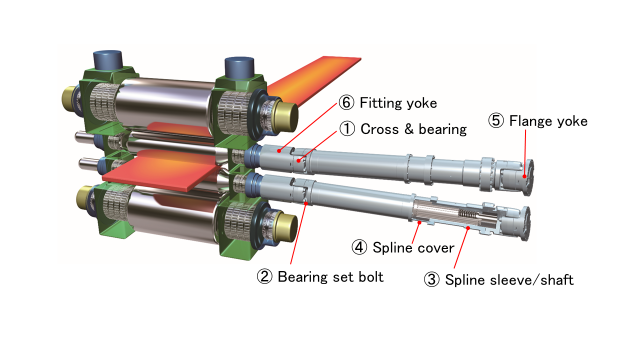
Power Transmission Mechanics in Metallurgical Rolling Processes
Power journeys from main motors through gearboxes to driveshafts, then via universal joints to roll spindles in steel mills. Cross bearings pivot, allowing angle changes while keeping velocity constant, essential when stands tilt under bite forces. Telescoping middles adjust for roll gap variations during threading.
Torque builds progressively in roughers, peaking as billets reduce, with shafts absorbing shocks from entry impacts. Balanced rotation prevents whip, critical at speeds where resonance could amplify deflections. Lubricant films shear in bearings, dissipating heat from friction in high-temp zones.
In reversing mills, quick direction changes stress yokes, demanding rapid response from overload devices. Mechanics involve periodic phasing checks to synchronize upper and lower rolls. This orchestration ensures uniform reduction across passes.
Cooling sprays challenge seals, yet multi-lip designs hold, preserving internals. The flow culminates in precise speed matching, vital for tension control in continuous lines. Experienced hands know greasing routines extend cross life amid scale bombardment.
Vibration monitoring spots bearing wear early, averting cascades. Mechanics blend rigidity for torque with flexibility for misalignment, a balance honed over decades in mill floors.
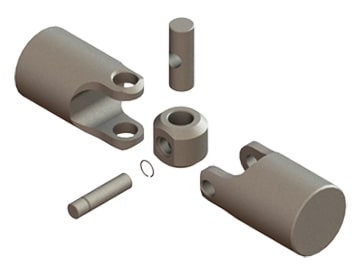
Standout Features of Driveshafts Built for Steel Mill Demands
Driveshafts in metallurgy stand apart with torsional stiffness resisting twist under sudden loads, measured at high Nm per radian. Shot-peened surfaces boost fatigue resistance, enduring millions of reversals in blooming mills. Modular joints allow swift cross replacements during short windows.
High-temp seals withstand 150°C ambients near furnaces. Low-maintenance designs incorporate sealed-for-life bearings in some variants. These traits support 24/7 runs, minimizing outages in integrated plants.
Custom phasing adjusts roll timing precisely. Reinforced yokes handle side loads from strip wandering. Such features derive from iterative improvements based on mill feedback.
Scale-resistant coatings endure abrasive environments. Quick-disconnect flanges speed changeouts. These elements enhance uptime in competitive production settings.
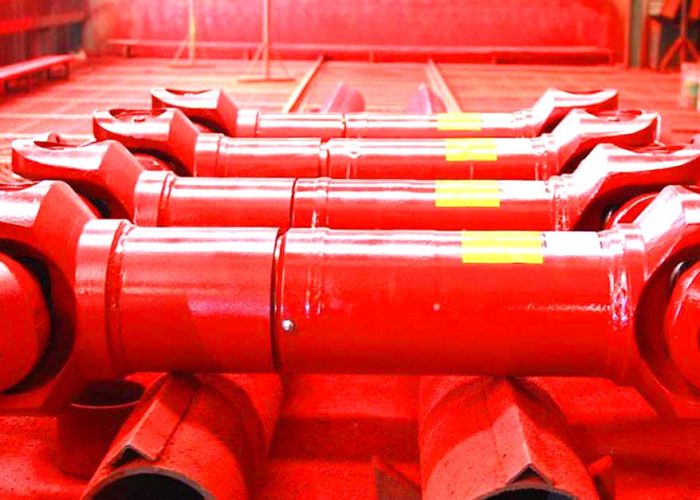
Proven Benefits of Advanced Driveshafts in Steel Production
Modern driveshafts cut energy losses through efficient joints, saving power in high-consumption mills. Extended life reduces spares inventory, easing logistics in large facilities. Vibration control improves roll accuracy, yielding better gauge tolerance.
Overload protection prevents cascade failures during jams. Easier alignment shortens setup times between campaigns. These gains accumulate in higher throughput and lower costs.
Compatibility with condition monitoring enables predictive strategies. Reduced weight eases handling during maintenance. Benefits manifest in sustained operations amid demanding schedules.
Real-World Deployments in Global Steel Operations
In a Chinese hot strip mill, upgraded driveshafts handled increased speeds, boosting coil output by 15% without failures over two years. Technicians noted smoother threading, reducing cobble rates.
An Indian integrated plant replaced legacy units in bar mills, gaining 20% longer intervals between overhauls amid dusty conditions. Production stability improved markedly.
German precision mills integrated balanced shafts for plate lines, achieving tighter tolerances and fewer surface defects. Energy audits showed notable efficiency gains.
Japanese mini-mills deployed compact designs in wire rod sections, supporting high-speed finishing with minimal vibrations. Yield enhancements followed.
In a Brazilian slab caster-linked mill, corrosion-resistant versions endured humid climates, extending service in roughing stands. Downtime dropped substantially.
Regulatory Frameworks for Driveshafts in Leading Steel Nations
China mandates GB/T standards for fatigue testing, requiring safety factors in high-load mills. India enforces BIS certifications for material traceability. Germany follows DIN norms with rigorous vibration limits.
Japan’s JIS emphasizes precision balancing. The United States requires OSHA-compliant guarding. These rules ensure safe, reliable performance across borders.
Critical Accessories and Wear Items for Mill Driveshafts
Cross kits with needle bearings wear first, needing swaps every few years. Torque limiters using friction discs protect against overloads. Guards prevent entanglement, mandatory replacements if damaged.
Grease fittings and high-temp lubricants maintain joints. Yoke pins and retaining clips secure connections. These items keep systems operational.
Challenges and Traits of Metallurgical Rolling Environments
Heat waves from red-hot slabs test material limits. Scale flakes abrade surfaces relentlessly. Vibration from impacts demands damping. These conditions forge tough requirements.
Field Notes from Steel Mill Driveshaft Work
During a night shift changeout in a busy mill, aligning new shafts under crane lights taught the value of laser tools. Post-install, the line ran smoother, with operators commenting on reduced noise.
Another instance involved diagnosing whip in a long span; balancing resolved it, preventing bearing failures. Such fixes highlight attention to details.
Technical Comparisons with Established Designs
Our driveshafts parallel Comer capacities in torque delivery for similar mill duties. GKN-style joints find equivalents in our cross designs. All manufacturer names and part numbers are for reference purposes only. We are an independent manufacturer.
Reasons to Partner with Us for Metallurgical Needs
Local expertise understands regional mill quirks. Quick deliveries from stocked items. Custom fits for unique stands. These factors build lasting collaborations.
Frequently Asked Questions on Rolling Mill Driveshafts
How to determine required torque rating?
Calculate from motor power and reduction, adding service factor for shocks.
Recent Highlights in Steel Driveshaft Developments
China’s May 2025 output dipped, yet demand for efficient shafts rises. India’s growth spurs upgrades. Germany focuses on precision.
Matching Gearboxes for Comprehensive Mill Power Systems
We produce gearboxes that pair perfectly with driveshafts in steel rolling, offering helical or planetary configurations for speed reduction and torque multiplication. Housings in cast iron withstand mill shocks, with ratios from 4:1 to 50:1 suiting roughers to finishers. Input interfaces match shaft flanges, ensuring seamless bolting. Hardened gears achieve AGMA class 12 for quiet operation amid noisy plants.
What torque levels are typical for hot strip mill main drives?
Expect 6,000 to 10,000 kNm nominal, with overloads to 140% during slab entry.
How frequently should crosses be inspected in dusty environments?
Every 500 hours; look for play exceeding 0.5 mm and replace proactively.
What angular misalignment can these shafts tolerate?
Up to 12 degrees per joint; exceed and risk accelerated wear.
Are they suitable for reversing mill applications?
Yes; reinforced yokes handle rapid direction changes without fatigue.
How to grease joints in high-heat zones?
Use high-temp synthetic via extended lines; purge old grease fully.
What materials resist scale abrasion best?
Hardened 42CrMo with nitride surfaces; extend life twofold.
Can lengths adjust for different roll diameters?
Telescopic designs offer 500 mm stroke; measure closed and open precisely.
How do overload devices work?
Friction or shear types release at set torque; reset after clearing cause.
What vibration monitoring indicates issues?
Spikes above 5 mm/s; check balance and alignment immediately.
Must guards always remain installed?
Yes; regulations demand full enclosure to prevent entanglement.
How to store spares in humid mill conditions?
Coated and sealed; rotate stock yearly to avoid corrosion.
What warranty periods apply?
Typically 24 months; log operating hours for valid claims.
Can sensors mount for condition monitoring?
Dedicated pads allow torque and temp probes; integrate with plant systems.
How to phase shafts for upper/lower rolls?
Mark yokes and align during install; verify with dial indicators.
What balance grade is required?
G2.5 or better; dynamic balancing essential for high speeds.