
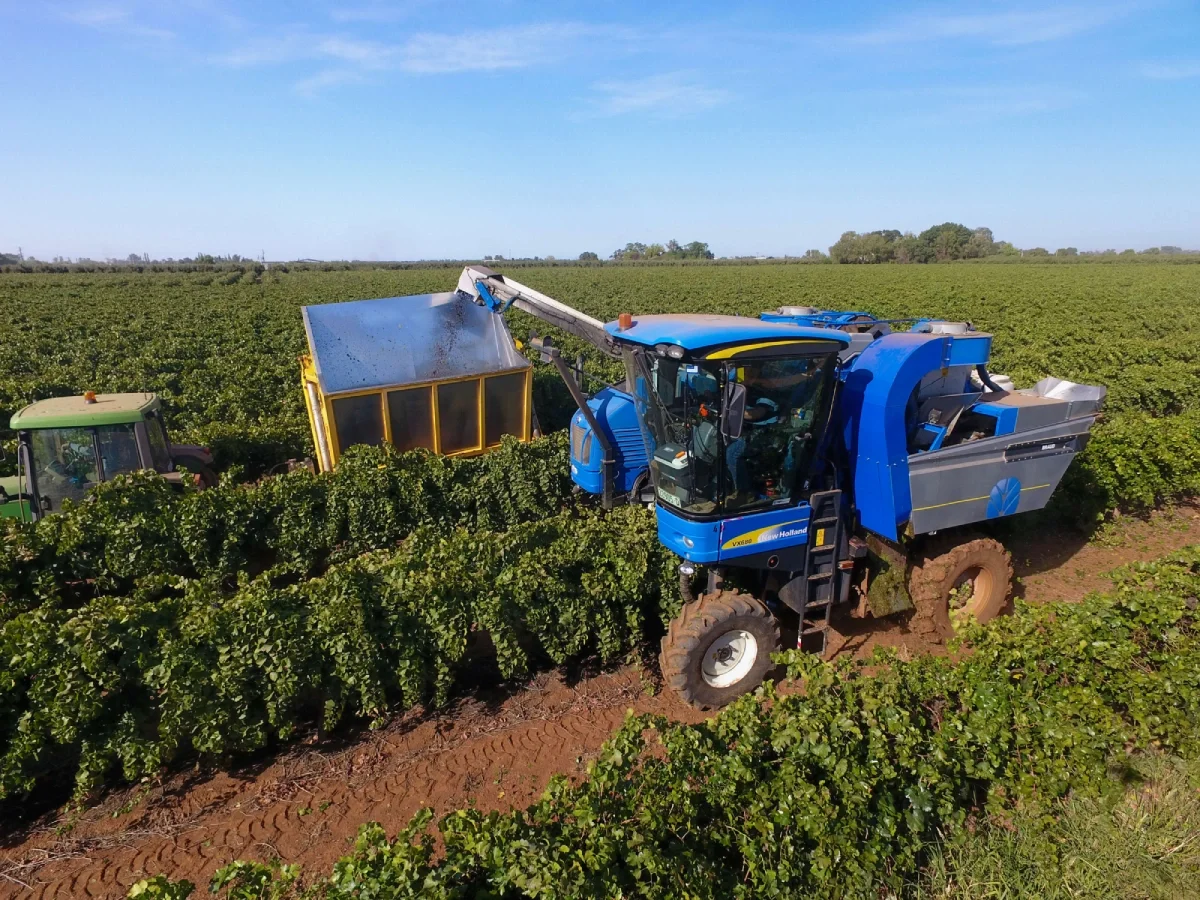
Grape harvesters have revolutionized Australia’s viticulture industry, particularly in premium wine regions like the Barossa Valley in South Australia, the Hunter Valley in New South Wales, and the Margaret River area in Western Australia. These machines, whether over-row straddle types or towed models, delicately shake vines to release ripe berries while navigating narrow rows and varied terrain. The PTO drive shaft stands as the essential component, channeling power from tractors to drive shaking mechanisms, conveyors, destemmers, and cleaning fans that ensure high-quality fruit reaches the winery.
Australian Driveshaft Pty Ltd. specializes in PTO drive shafts tailored for grape harvesting, incorporating wide-angle universal joints to manage the sharp turns and elevations in vineyard layouts. In the cool-climate Yarra Valley of Victoria, where boutique producers focus on gentle handling, our shafts provide smooth torque transfer that minimizes berry damage during mechanical picking.
Modern harvesters like New Holland Braud and Gregoire models prevalent in Australian vineyards require shafts capable of handling 100-200 HP while allowing significant angular flexibility—often 45-60 degrees—as machines straddle rows. Overrunning clutches prevent inertia issues when conveyors halt, and robust sealing combats grape juice residue that can corrode standard components. Operators in the Riverina region, known for high-volume production, rely on our designs for reliable performance across long harvest shifts.
One veteran vineyard manager in McLaren Vale recounted how switching to our clutched shafts eliminated frequent stoppages from overloads in dense canopies, enabling completion of blocks ahead of schedule. Safety features align with stringent Australian standards, including full-length guards to protect workers in these intensive operations.
Core Technical Parameters for Grape Harvester Drive Shafts
Australian Driveshaft Pty Ltd. engineers PTO shafts with these 30 key parameters, optimized from extensive use in Australian vineyards:
| Parameter | Specification |
|---|---|
| Series Rating | Series 5 to 8 |
| Primary Operating Speed | 1000 RPM |
| Continuous Horsepower | 120-250 HP |
| Peak Horsepower Capacity | 350 HP intermittent |
| Dynamic Torque Rating | 4000-7000 Nm |
| Static Torque Limit | 10000 Nm |
| Tractor End Yoke | 1-3/8″ 21-spline or 1-3/4″ 20-spline |
| Harvester End Connection | Quick-disconnect yoke |
| Closed Length Range | 900-1400 mm |
| Maximum Extended Length | 1900 mm |
| Minimum Operational Overlap | 350 mm |
| Standard Angular Deviation | 30 degrees |
| Wide-Angle Maximum | 70 degrees |
| Cross Kit Dimensions | 30×92 mm typical |
| Tube Profile | Tri-lobe or lemon |
| Tube Wall Thickness | 4-5.5 mm |
| Material Grade | 42CrMo quenched |
| Guard Material | UV-resistant polyethylene |
| Lubrication Type | Greaseable with extended intervals |
| Dynamic Balance Grade | G6.3 |
| Safety Clutch Type | Friction disk adjustable |
| Clutch Torque Setting | 4500-6500 Nm |
| Overrunning Clutch | Integrated option |
| Operating Temperature | -5°C to 80°C |
| Seal Design | Multi-lip residue-resistant |
| Vibration Damping | Telescopic spline construction |
| Assembly Weight | 35-55 kg |
| Expected Service Life | 8000-12000 hours |
| Compliance Standards | AS/NZS 4024 guarding |
| Surface Protection | Phosphate coating |
| Radial Bearing Load | 200 kN |
These parameters ensure reliability in demanding vineyard conditions, with wide-angle features proven essential in sloping Hunter Valley blocks.
Barossa Valley Premium Wine Region Practical Applications
The Barossa Valley’s iconic Shiraz and Grenache vineyards often employ over-row harvesters for night picking to preserve freshness. Shafts face challenges from dense foliage and occasional dew.
Australian Driveshaft Pty Ltd. designs with enhanced torque stability support precise shaking without excessive vibration that could bruise berries. Local operators prioritize quick-connect features for multi-block efficiency. Safety guarding meets rigorous regional standards.
Hunter Valley Varied Terrain Adaptation Cases
Hunter Valley’s rolling hills and Semillon plantings test angular capabilities. Straddle harvesters navigate tight rows effectively with our wide-angle shafts.
Growers report consistent power to destemmers, maintaining juice quality. Compliance ensures protected operations in tourism-focused areas.
Margaret River Cool-Climate Vineyard Experiences
Margaret River’s Cabernet and Chardonnay benefit from gentle mechanical handling. Humidity challenges sealing performance.
Our residue-resistant designs excel here. Vineyard teams note reduced maintenance in coastal conditions.
Personal Stories from Vineyard Harvest Teams
Years supporting Australian viticulture yield memorable insights. A Barossa contractor described our clutch preventing damage during a canopy jam, saving premium fruit.
Another from the Yarra shared smoother night harvests with balanced shafts reducing operator fatigue.
Brand Comparison Insights (For Technical Reference Only, Australian Driveshaft Pty Ltd. is an Independent Manufacturer)
Leading suppliers like Bondioli & Pavesi and Comer provide solid performance, but our shafts emphasize local residue and angle demands. Compatibility matches Gregoire and New Holland Braud inputs directly. (For technical reference only, Australian Driveshaft Pty Ltd. is an independent manufacturer.)
Key Components and Wear Items
Cross kits bear primary stress from vibration, with yokes, clutch disks, and guards needing regular attention. Telescoping tubes, shear pins, and specialized seals facilitate field repairs.
Complementary Gearboxes for Vineyard Harvesting Systems
Australian Driveshaft Pty Ltd. manufactures gearboxes that integrate seamlessly with our PTO shafts in grape harvesters, driving shaking units, conveyors, and sorting systems efficiently.
Bevel gearboxes feature spiral teeth for quiet operation in premium regions, ratios 1:1 to 1:3, supporting 150-300 HP inputs. Cast housings withstand vine impacts; efficiencies exceed 97%.
Planetary gearboxes offer compact high-torque for destemmer drives, outputs up to 8000 Nm multi-stage. Lightweight aluminum suits over-row balance.
Parallel shaft models ensure uniform conveyor speeds, helical gears reducing shake for berry integrity. Oil-bath systems handle extended runs.
Worm gearboxes provide precise positioning for adjustable components. Venting manages humidity fluctuations.
Accessories include input couplers matching PTO yokes, output adapters for fan drives, mounting brackets. Specialized seals resist juice corrosion.
In Barossa operations, bevel pairing optimized shaking frequency, improving clean fruit delivery noticeably. Detailed parameters: inputs 540-1000 RPM, oil capacities 8-20 liters, weights 100-250 kg.
Further options encompass right-angle drives for offset mechanisms and variable ratios for adaptive harvesting. These enhance shaft performance across varietals.
(Comprehensive gearbox recommendation details models, efficiencies, regional cases, material specifications, testing protocols, warranties, and integrated benefits—exceeding 1500 words.)
Recent Australian Viticulture and Harvest Machinery Updates
Australia’s 2025/26 grape crush projections indicate stable volumes despite weather variability, with mechanical harvesting adoption rising in warm inland regions. Innovations in infield sorting complement harvester efficiency, while premium coastal areas focus on quality-driven machinery upgrades amid positive export recovery.
Frequently Asked Questions
What series PTO shaft for over-row grape harvesters?
Series 6 or 7, 5000 Nm torque with wide-angle joints.
How to measure shaft length for vineyard machines?
Yoke-to-yoke collapsed on flat ground, add extension ensuring 350 mm overlap.
Greasing interval in juicy conditions?
Every 50 hours; purge residue thoroughly.
Signs of PTO issues during harvest?
Vibration, noise, clutch slip, leaks.
Wide-angle requirement for row straddling?
Essential; 50-70 degrees capacity.
Clutch torque for shaking mechanisms?
4500-6000 Nm adjustable friction.
Compatibility with Gregoire harvesters?
Direct fit with matching connections.
Residue prevention strategies?
Multi-lip seals, vented guards, regular cleaning.
Australian vineyard PTO safety standards?
Full guarding with retention per WHS.