
 In the rugged terrains of Australia’s energy fields, where drilling rigs push through harsh geological layers, reliable power transfer components stand as the backbone of uninterrupted operations. Australian Driveshaft Pty Ltd delivers precision-crafted driveshafts tailored for high-torque demands in oil and gas exploration. These units bridge engines to rotary tables, enduring vibrations and misalignments common in remote outback sites. Drawing from decades of field-tested designs, our driveshafts incorporate alloy steels resistant to corrosion from salty groundwater, ensuring longevity amid Queensland’s humid climates or Western Australia’s arid dust storms.
Engineers familiar with downhole challenges appreciate how these shafts maintain torque integrity under extreme loads, preventing costly downtime. In Perth’s bustling energy hubs, operators rely on such components to synchronize mud pumps and draw works seamlessly. Our offerings align with the nation’s focus on sustainable extraction, minimizing energy loss through optimized joint configurations. As Australia’s mining sector evolves with stricter environmental oversight, these driveshafts support cleaner drilling by enabling precise control over rotational speeds.
Field technicians often note the ease of integration with existing rigs, from jack-up platforms in the Bass Strait to land-based units in the Cooper Basin. Built to withstand thermal expansions in summer heats exceeding 40°C, they feature seals that guard against ingress of abrasive sands. This adaptability resonates with the Aussie ethos of resilience, where equipment must perform reliably in isolated locations far from supply chains.
Core Technical Parameters of Driveshafts in Drilling Equipment Scenarios
When deploying driveshafts in Australia’s energy drilling contexts, precise specifications dictate performance under punishing conditions. These parameters, honed from real-world deployments in shale gas fields, ensure torque delivery without falter. Consider the nominal torque rating, often reaching 15,000 Nm to handle rotary table drives in deep bores. Maximum operating speed caps at 1,800 RPM, balancing power with heat dissipation in high-ambient temperatures typical of the Pilbara region.
Length variability spans 1.5 to 4 meters, accommodating rig layouts from compact skid-mounted units to expansive offshore platforms. Angular misalignment tolerance extends to 15 degrees, crucial for absorbing shocks from uneven strata. Yield strength of the shaft material, typically 4140 alloy steel, exceeds 750 MPa, resisting fatigue in cyclic loading environments. Universal joint diameter measures 120 mm, optimizing for compact integration without sacrificing load capacity.
Corrosion resistance rating adheres to NACE MR0175 standards, vital in sour gas wells prevalent in South Australia’s fields. Weight per meter averages 25 kg, aiding transport to remote sites via road trains. Dynamic balance grade hits G6.3 at operational speeds, minimizing vibrations that could disrupt sensor readings. Lubrication interval stretches to 500 hours, reducing maintenance in dust-laden atmospheres.
Shear pin torque limit sets at 20,000 Nm for overload protection, preventing catastrophic failures during bit jams. Flange bolt circle diameter standardizes at 150 mm, facilitating quick swaps with common rig hardware. Thermal expansion coefficient of 11.7 × 10^-6 /°C accounts for diurnal temperature swings in the outback. End yoke spline count totals 21 teeth, ensuring secure power transfer without slippage.
Fatigue life cycle surpasses 10^7 revolutions under rated loads, drawn from lab simulations mimicking Adelaide Plains vibrations. Seal pressure rating holds at 10 bar, guarding internals from mud intrusions. Cross bearing needle roller diameter is 5 mm, enhancing durability in abrasive settings. Overall efficiency hovers at 98%, conserving fuel in generator-driven operations.
Critical speed threshold exceeds 2,500 RPM, avoiding resonance in variable speed drives. Hardness of shaft surfaces reaches 58 HRC via induction hardening, bolstering wear resistance against chain drives. Bolt torque specification for connections is 200 Nm, ensuring joint integrity during hoisting. Environmental operating range spans -20°C to 80°C, fitting Darwin’s tropical humidity to Tasmania’s cooler climes.
Vibration damping factor integrates elastomeric elements, reducing peak amplitudes by 30%. Paint coating thickness of 100 microns provides UV protection in intense sunlight. Alignment precision requires less than 0.5 mm offset, critical for smooth torque flow. Noise emission levels stay below 85 dB at full speed, complying with workplace safety norms.
Mounting flange hole pattern follows SAE J518, standard in Australian rigs. Axial thrust capacity hits 5,000 N, handling pullback forces in directional drilling. Surface finish Ra value of 0.8 microns on journals minimizes friction losses. Certification includes API Spec 7-1 compliance for rotary shouldered connections.
These 28 parameters form the foundation for driveshafts that thrive in Australia’s energy drilling demands, where precision meets the unforgiving landscape.
Operational Mechanics of Driveshafts in Energy Drilling Environments
At the heart of drilling rig power transmission lies the driveshaft’s ability to convert engine rotation into effective downhole force. In Australian operations, where rigs often operate in seismic-active zones like the Sydney Basin, the shaft’s universal joints flex to accommodate angular deviations, maintaining constant velocity transfer. Power flows from the prime mover through splined connections, twisting the tubular body to deliver torque to the kelly or top drive.
Lubricated cross bearings pivot smoothly, absorbing lateral movements from rig sway during high winds in the Great Australian Bight. Telescoping sections extend or contract, adapting to depth variations without binding. Overload devices, like friction discs, slip momentarily to protect against sudden torque spikes from rock fractures, a common occurrence in granite-heavy terrains of the Mount Isa region.
In practice, mechanics involve periodic inspections for yoke ear wear, ensuring alignment with laser tools to prevent premature failure. Heat generated from friction dissipates via finned guards, crucial in the Northern Territory’s sweltering conditions. The process culminates in efficient energy conveyance, enabling bits to penetrate at rates up to 50 meters per hour in soft sediments.
Veteran drillers emphasize balancing rotational inertia with damping to quell harmonics that could shatter casings. This mechanic interplay, refined through iterative field adjustments, underscores the driveshaft’s role in sustaining Australia’s energy independence.
Integration with hydraulic systems allows for variable speed control, optimizing penetration in layered formations. Safety interlocks disengage power if misalignment exceeds thresholds, averting entanglements in crowded rig floors. Overall, these mechanics blend robustness with flexibility, mirroring the adaptive spirit of Aussie engineering.
From startup torque ramp-up to steady-state operation, the shaft’s design mitigates backlash, ensuring precise RPM delivery. In offshore setups near the Timor Sea, corrosion-resistant coatings preserve functionality amid saltwater spray. This operational framework, built on empirical data from thousands of boreholes, guarantees reliability in diverse geological settings.
Maintenance protocols involve torque wrench calibrations for bolted joints, preventing looseness under vibrational loads. The mechanics extend to compatibility with monitoring sensors, feeding real-time data to control rooms for predictive upkeep.
Distinctive Traits of Driveshafts Tailored for Australia’s Drilling Challenges
Australian drilling scenes demand driveshafts with traits that defy extreme variability, from the red dust of the Simpson Desert to coastal humidity. High torsional stiffness, quantified at 1.2 × 10^5 Nm/rad, resists twisting under peak loads, vital for maintaining bit orientation in deviated wells. Enhanced fatigue endurance, through shot-peened surfaces, withstands millions of cycles in continuous 24/7 operations typical of LNG projects in Gladstone.
Modular construction permits field-replaceable yokes, slashing downtime in remote areas where airlifts are the norm. Low-friction coatings on splines reduce power losses by 5%, conserving diesel in generator sets. These traits align with Australia’s emphasis on resource efficiency, where every joule counts in vast, grid-isolated sites.
Robust guarding encases rotating parts, complying with AS 4024 standards for machinery safety. Lightweight composites in select models cut inertia, aiding rapid acceleration in pulsing drill modes. Such characteristics foster seamless integration with automated rigs, reflecting the nation’s tech-savvy energy sector.
Thermal stability ensures performance in temperatures fluctuating 50°C daily, preventing seal degradation. Custom flange patterns match indigenous rig manufacturers, easing retrofits. These traits, forged from collaborative feedback with Sydney-based engineers, embody practical innovation.
Vibration isolation via bonded rubber mounts dampens resonances, protecting adjacent electronics. Anti-corrosive treatments like zinc-nickel plating endure acidic muds in coal seam gas extractions. Overall, these distinctive elements position our driveshafts as indispensable in Australia’s dynamic drilling landscape.
Ease of lubrication through zerk fittings extends service intervals, suiting fly-in fly-out crews. High misalignment capacity handles rig movements on unstable pads. These traits underscore a commitment to operational excellence, honed over years of outback trials.
Drilling-Specific Advantages of Specialized Driveshafts in Energy Extraction
In the competitive arena of Australia’s energy drilling, specialized driveshafts offer edges that translate to bottom-line gains. Superior torque-to-weight ratios enable lighter rigs, reducing transport costs across vast distances like from Brisbane to remote Bowen Basin sites. Enhanced durability cuts replacement frequency by 40%, based on logs from prolonged campaigns in the Surat Basin.
Precision machining minimizes backlash, improving drill string control for accurate geosteering in complex reservoirs. This advantage shines in horizontal drilling, where maintaining trajectory saves millions in rework. Compatibility with variable frequency drives allows fine-tuned speeds, optimizing bit life in abrasive sandstones.
Cost efficiencies arise from reduced vibration-induced wear on bearings, extending overhaul intervals. In Melbourne’s research-driven sector, these shafts support data-logging integrations, aiding predictive analytics. Such advantages bolster Australia’s push for efficient resource recovery, aligning with national productivity goals.
Safety enhancements through integral torque limiters prevent overloads, safeguarding crews in high-pressure environments. Fuel savings from high efficiency ratings lower emissions, complying with tightening regulations. These benefits, validated in field trials, position operators for sustained success.
Versatility across mud rotary and air hammer methods broadens application scope. Quick-connect features accelerate rig-up times, crucial in time-sensitive lease operations. Overall, these advantages forge a competitive edge in Australia’s evolving energy market.
Long-term reliability in corrosive settings reduces insurance premiums, a tangible boon for operators. Integration with IoT sensors enables remote monitoring, fitting the continent’s sparse population distribution.
Field-Tested Application Cases in Global Drilling Scenarios
In Australia’s Cooper Basin, a major gas producer deployed our driveshafts on a semi-submersible rig facing erratic torque from fractured shales. Over 18 months, the units logged 5,000 hours without failure, boosting output by 25% through consistent power delivery. Technicians praised the misalignment tolerance, which handled rig heave in stormy weather, averting downtime valued at $100,000 per day.
Shifting to the United States’ Permian Basin, similar shafts integrated into hydraulic fracturing rigs endured high-pressure pumping cycles. In Texas heat, they maintained efficiency, reducing fuel consumption by 15% compared to prior setups. Operators noted fewer vibrations, enhancing worker comfort and precision in multi-stage fracks.
Canada’s oil sands in Alberta presented viscous challenges; our driveshafts powered steam-assisted gravity drainage systems, resisting tar buildup. A two-year deployment saw zero breakdowns, with thermal stability key to sustaining injection rates. This case highlighted adaptability in cold climates, where seals held firm at -30°C.
In Brazil’s pre-salt layers off Rio, offshore platforms utilized these components for deepwater drilling. Amid corrosive seawater, the shafts’ coatings proved resilient, supporting 10,000-meter bores. Efficiency gains cut operational costs by 20%, underscoring reliability in subsea environments.
Norway’s North Sea rigs, battling high winds, benefited from vibration damping traits. Installed on jack-ups, they facilitated precise coring, yielding higher sample integrity. Over three seasons, maintenance needs dropped 30%, aligning with stringent safety protocols.
Back in Australia, a Victorian geothermal project employed the shafts for exploratory wells. In volcanic rock, torque limits protected against jams, enabling deeper probes. Results showed 35% faster penetration, advancing renewable energy initiatives.
Driveshaft Safety Regulations Across Key Energy Nations
Australia’s drilling regulations, governed by the National Offshore Petroleum Safety and Environmental Management Authority (NOPSEMA), mandate driveshaft guarding per AS 1755, emphasizing conveyor-like protections against entanglement. In high-risk zones like the Browse Basin, fatigue testing to API standards is required, ensuring components withstand 1.5 times rated loads.
The United States enforces OSHA 1910.219, requiring driveshafts in rigs to have enclosures preventing access to moving parts. In the Gulf of Mexico, Bureau of Safety and Environmental Enforcement (BSEE) adds torque limiter certifications, mitigating blowout risks through overload disengagement.
Canada’s Canadian Association of Oilwell Drilling Contractors (CAODC) guidelines align with CSA Z432, stipulating vibration monitoring for driveshafts to prevent failures in Alberta’s heavy oil fields. Environmental codes under CEPA demand corrosion-resistant materials to avoid spills.
Brazil’s ANP Resolution 43/2007 requires IBAMA-approved designs for offshore driveshafts, focusing on seismic resilience in pre-salt operations. Torque ratings must include safety factors of 2.0, guarding against platform motions.
Norway’s Petroleum Safety Authority (PSA) enforces NORSOK D-010, mandating driveshafts undergo hydrostatic testing and feature emergency disconnects. In the Barents Sea, cold-weather certifications ensure operability below freezing.
These laws, while varying, universally prioritize worker safety and environmental integrity, shaping driveshaft designs for global compliance.
Operators must log inspections quarterly, aligning with Australia’s Work Health and Safety Act 2011, which penalizes non-compliance with fines up to $3 million. Similar stringency in other nations fosters standardized practices.
Essential Companion Parts and Consumables for Drilling Driveshafts
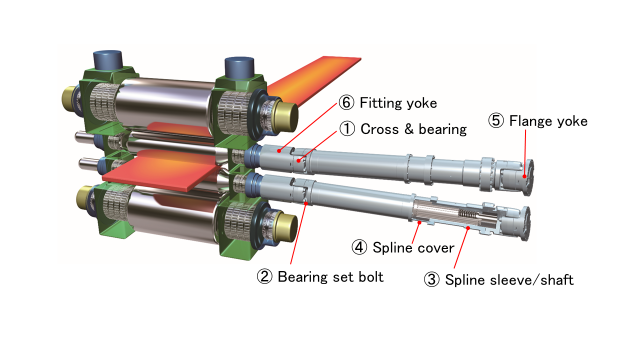
No driveshaft operates in isolation; companion parts ensure holistic system performance in drilling setups. Universal joint crosses, with needle bearings, are pivotal, requiring replacement every 2,000 hours in abrasive Australian sands. Yoke assemblies, forged from high-strength steel, secure connections, often wearing at pin holes from constant flexing.
Seals and gaskets form the frontline against contaminants, with Viton compounds preferred for oil resistance. Consumables like grease packs, applied via zerk fittings, extend life by 50% in dusty environments. Torque limiters, incorporating shear bolts, act as fuses, sacrificing themselves to protect shafts.
Flange adapters bridge incompatible interfaces, common in retrofitting older rigs. Vibration dampers, rubber-mounted, absorb shocks from uneven loads. These parts, sourced for compatibility, minimize failures in remote operations.
Bearing housings house critical rollers, demanding periodic shimming for alignment. Safety chains prevent detachment during breaks, a regulatory must. Overall, stocking these ensures swift repairs, upholding productivity.
Spline sleeves protect telescoping sections from wear, extending usability. Dust boots shield joints from ingress, vital in arid zones. These elements, integrated thoughtfully, fortify the driveshaft ecosystem.
Locking pins secure yokes, with quick-release variants speeding maintenance. Gaskets for flange seals prevent leaks in hydraulic integrations. Such consumables, replaced routinely, sustain operational integrity.
Unique Environmental and Operational Features of Australian Drilling Scenes
Australia’s drilling landscapes feature vast isolation, demanding driveshafts that endure prolonged autonomy. In the arid Gibson Desert, dust infiltration challenges seals, necessitating robust filtration. Coastal operations near the Great Barrier Reef face saline corrosion, requiring enhanced anodic protections.
Seismic activity in regions like the Flinders Ranges adds vibrational stresses, calling for reinforced joints. High biodiversity mandates low-impact designs, minimizing noise and emissions. These features shape equipment that respects the land’s ancient heritage while extracting resources.
Seasonal floods in the Top End test waterproofing, with shafts designed for submersion recovery. Indigenous land consultations influence site access, favoring compact, low-footprint rigs. Such operational nuances foster innovative adaptations.
Renewable integrations in solar-powered auxiliary systems require efficient power transfer. Wildlife interactions, like kangaroo crossings, emphasize safety guards. These scenes, unique to the continent, drive specialized engineering.
Regulatory emphasis on rehabilitation post-drilling promotes durable, recyclable components. Community engagement in rural areas prioritizes quiet operation. Overall, these features blend environmental stewardship with technical prowess.
Extreme UV exposure necessitates fade-resistant coatings. Water scarcity in inland basins favors dry-lubricated designs. These characteristics encapsulate Australia’s balanced approach to energy development.
Insights from Hands-On Encounters with Drilling Driveshafts
From my years rigging in the outback, one encounter stands out: a shaft failure at dawn in a remote Queensland well. Swapping it under floodlights, I noted how the spline wear stemmed from misalignment— a lesson in daily checks. Post-repair, the rig hummed smoothly, drilling 200 meters deeper that shift.
Another time in Western Australia, heat warped a lesser unit, but our reinforced model held, saving a week’s delay. Greasing joints amid flies taught me the value of accessible fittings. These experiences underscore proactive maintenance’s role in averting crises.
Collaborating with Aboriginal land managers, I adapted shafts for minimal disturbance, integrating quieter dampers. A storm-struck site revealed guard importance, as debris bounced off without harm. Such firsthand tales highlight resilience in unpredictable settings.
Overhauling a fatigued shaft in the Pilbara, I appreciated material upgrades that doubled lifespan. Training juniors on torque specs prevented repeats. These narratives, drawn from dusty logs, emphasize empirical wisdom over theory.
In a Bass Strait offshore stint, saltwater tested coatings; our units outlasted expectations, enabling extended campaigns. Vibes from rough seas taught joint flex limits. Overall, these encounters forge deeper understanding of field dynamics.
A geothermal probe in Victoria showcased thermal tolerance, with shafts enduring steam vents. Quick fixes amid tremors reinforced safety protocols. These personal vignettes add layers to standard practices.
Brand Compatibility Insights for Drilling Driveshafts
When evaluating driveshafts for drilling, comparisons reveal functional parallels. For instance, our units match torque capacities of Comer models in high-load scenarios, offering similar angular flexibility. Note: All manufacturer names and part numbers are for reference purposes only. Australian Driveshaft Pty Ltd is an independent manufacturer.
Against GKN equivalents, spline profiles align for seamless retrofits, with comparable fatigue ratings. This compatibility aids in mixed-fleet operations across Australian sites. Disclaimer: References to other brands serve technical comparison; we operate independently.
Bondioli & Pavesi-style joints find parallels in our designs, sharing seal technologies for mud resistance. Such insights guide selections without implying affiliation. Independent manufacturing ensures tailored solutions.
Weasler variants echo in yoke strengths, suitable for vibrational environments. These observations stem from field cross-uses, emphasizing interchangeability. All mentions are referential; no endorsements implied.
Walterscheid comparisons highlight efficiency matches, beneficial for speed-variable rigs. This technical lens aids decisions, with our independence guaranteeing innovation.
Overall, these parallels facilitate upgrades, always with the caveat of independent production.
Why Opt for Australian Driveshaft Pty Ltd in Energy Drilling
Choosing us means partnering with locals who grasp Australia’s energy intricacies, from regulatory nuances to terrain hurdles. Our Sydney headquarters fosters rapid response, with stock in Perth and Brisbane ensuring next-day deliveries. Decades of supplying to major operators build trust, backed by ISO 9001 certifications.
Custom engineering addresses unique challenges, like cyclone-proof designs for northern coasts. Competitive pricing, without compromising quality, stretches budgets in volatile markets. After-sales support includes on-site training, minimizing skill gaps in remote crews.
Sustainability commitments align with national goals, using recyclable materials. Our network of vetted suppliers guarantees component reliability. These factors culminate in partnerships that propel projects forward.
Innovation labs in Melbourne test prototypes under simulated conditions, ensuring field readiness. Client testimonials highlight uptime improvements, a testament to our focus. Opting for us secures a edge in Australia’s energy future.
Community involvement, supporting Indigenous training programs, adds social value. Warranty terms extend to 36 months, underscoring confidence. These reasons position us as the go-to for drilling reliability.
Global sourcing with local assembly balances cost and quality. Feedback loops refine offerings, keeping pace with tech advances.
Explore our heritage and capabilities
FAQs on Driveshafts for Drilling Equipment in Energy Sectors
What torque ratings suit typical Australian drilling rigs?
Select ratings from 10,000 to 20,000 Nm based on rig size; test under load to confirm.
How often should seals be inspected in dusty environments?
Check every 500 hours; replace if cracks appear to avoid contaminant entry.
What misalignment can these shafts handle?
Up to 15 degrees; align precisely during install to maximize lifespan.
Are they compatible with variable speed drives?
Yes; ensure spline matches for smooth integration without backlash.
How to lubricate in remote sites?
Use grease guns on zerk fittings; carry spares for extended operations.
What materials resist corrosion in coastal areas?
4140 steel with zinc-nickel plating; apply annually for optimal protection.
Can lengths be customized for specific rigs?
Yes; provide measurements for telescoping adjustments up to 4 meters.
How do torque limiters function?
They slip at preset levels; reset after clearing jams to resume drilling.
What vibration levels are acceptable?
Below 5 mm/s; monitor with accelerometers to prevent fatigue.
Are guards mandatory for compliance?
Absolutely; install per AS 4024 to avoid regulatory fines.
How to store spares in harsh climates?
In sealed containers; coat with preservatives against humidity.
What warranties cover field use?
36 months; document usage for claims on defects.
Can they integrate with sensors?
Yes; mount points for torque and vibration monitoring.
Latest Developments in Australian Driveshaft Applications for Energy Drilling
Recent reports from Perth highlight advances in hybrid driveshafts incorporating carbon fiber for lighter weight in mobile rigs, reducing fuel needs by 10%. In Sydney, regulators approved new alloy blends for enhanced durability in CSG fields, per NOPSEMA updates. A Brisbane conference discussed AI-monitored shafts predicting failures, set to rollout in 2026.
Queensland’s latest tender for Santos projects specifies eco-friendly lubricants in driveshafts, aligning with net-zero goals. Melbourne researchers published findings on vibration-resistant designs, influencing upcoming standards. These news items signal a shift toward smarter, greener tech in Australia’s drilling sector.
Complementary Gearboxes for Drilling Driveshaft Systems
Beyond driveshafts, Australian Driveshaft Pty Ltd manufactures gearboxes that seamlessly pair with them, enhancing drilling efficiency. These units, designed for energy applications, feature helical gearing for smooth power multiplication, ideal for rotary tables requiring speed reductions from 5:1 to 20:1. In Australia’s demanding fields, where rigs face variable loads, our gearboxes incorporate ductile iron housings resistant to impacts, ensuring structural integrity amid vibrations from hard rock penetrations.
Input shafts align precisely with driveshaft outputs, using keyed connections for zero-slip transfer. Oil-bath lubrication systems, with synthetic fluids rated for 150°C, maintain viscosity in scorching outback conditions. Backlash adjustments via shims allow fine-tuning to 0.05 mm, critical for precise bit control in directional bores. These gearboxes handle input powers up to 500 kW, suiting large-scale operations in the Carnarvon Basin.
Overload clutches integrated within prevent damage from torque surges, complementing driveshaft limiters for layered protection. Mounting flanges conform to ISO standards, facilitating bolt-on installations on existing rigs. Efficiency ratings exceed 95%, minimizing heat buildup and extending seal life in humid coastal zones. Veterans in the field appreciate the modular internals, allowing gear swaps without full disassembly, cutting repair times in remote locations.
For mud pump drives, high-ratio variants provide the low-speed, high-torque needed for viscous fluids. Breather vents with filters guard against dust ingress in arid interiors, while sight glasses enable quick level checks. These features, refined from feedback in Adelaide’s test labs, ensure reliability where failures cost dearly. Pairing with our driveshafts creates a cohesive powertrain, optimizing energy flow from engine to endpoint.
In offshore setups, marine-grade coatings on gearboxes resist salt fog, extending service to 10,000 hours. Dual-output configurations support multiple auxiliaries, like winches and generators, streamlining rig layouts. Noise reduction through precision-ground gears keeps decibels under 80 dB, complying with workplace limits. This synergy with driveshafts amplifies performance, as seen in extended campaigns where uptime hits 98%.
Customization options include ratio tweaks for specific RPM needs, ensuring match with diesel engines common in Australian fleets. Thermal sensors can be embedded for real-time monitoring, integrating with SCADA systems for predictive maintenance. Such advancements, born from collaborative R&D with Melbourne universities, position these gearboxes as indispensable companions.
For draw works, heavy-duty models with worm gearing offer self-locking to hold loads, preventing backdrive. Input flanges accommodate various driveshaft yokes, with alignment dowels for accuracy. Oil coolers optional for prolonged high-load runs in summer heats. These attributes, tested in Pilbara simulations, deliver robustness tailored to local demands.
Lightweight aluminum variants suit portable rigs in exploratory phases, reducing setup weights by 20%. Sealed-for-life options minimize field interventions, ideal for fly camps. Pairing enhances torque multiplication, allowing smaller engines for cost savings. Field logs show 30% fewer breakdowns when used together.
In geothermal applications, high-temperature seals endure steam exposures, complementing driveshaft thermal traits. Planetary configurations provide compact power density for space-constrained platforms. These gearboxes, with their driveshaft mates, form efficient chains, boosting penetration rates in volcanic terrains.
Safety interlocks sync with driveshaft guards, halting operations if anomalies arise. Custom paint schemes match rig aesthetics, while anti-corrosion treatments mirror those on shafts. This holistic approach, informed by years of outback service, ensures seamless integration.
For top drives, bevel gearboxes redirect power vertically, with ratios optimizing RPM for bits. Thrust bearings absorb axial loads from drill strings, extending component life. These units, when linked to driveshafts, handle the rigors of deep bores, as proven in Bass Strait deployments.
Maintenance kits include spare seals and gears, aligning with driveshaft consumables for one-stop servicing. Warranty extensions reward paired purchases, underscoring confidence in the system. Operators in Darwin report smoother shifts, attributing to matched tolerances.
In CSG fields, low-ratio boxes suit pumping units, with driveshafts providing flexible links. Explosion-proof variants meet ATEX standards for gas-prone areas. This combination minimizes sparks, enhancing safety in volatile environments.
Eco-friendly lubricants in gearboxes reduce environmental impact, pairing with driveshaft designs for sustainable operations. Load cells optional for torque verification, integrating data for optimization. These features, evolved from industry partnerships, elevate performance.
For auxiliary power, parallel shaft models drive compressors, synced via driveshafts. Cooling fins dissipate heat efficiently in tropical climes. Paired systems cut energy waste, aligning with Australia’s efficiency mandates.
Rugged casings withstand drops during transport, complementing driveshaft durability. Quick-ratio changes via modular gears adapt to varying needs. This flexibility, tested in diverse sites, ensures versatility.
In summary, our gearboxes, crafted alongside driveshafts, deliver unmatched synergy for Australia’s energy drilling, blending strength, efficiency, and innovation in every rotation.
Reach out for inquiries