
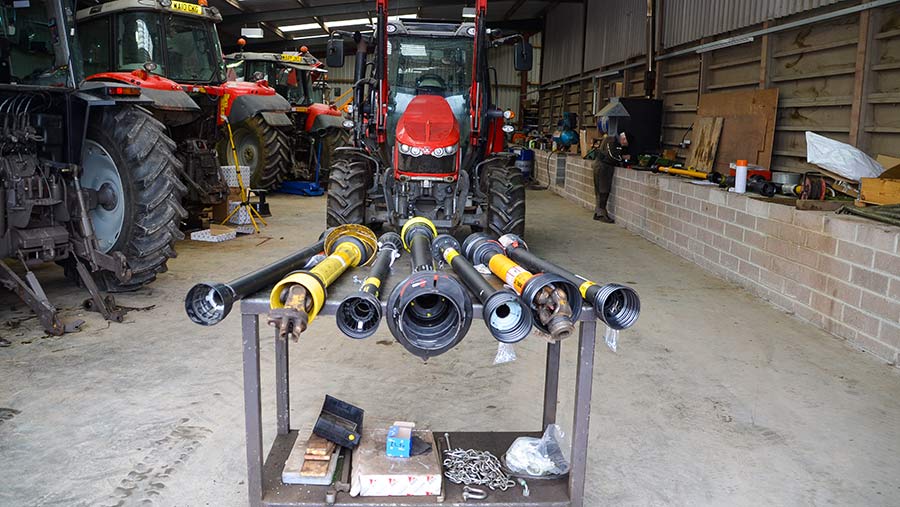
Seedbed combination machines bring together multiple soil preparation steps into one efficient pass, typically integrating power harrows, cultivators, rollers, and sometimes seeders for seamless tillage and planting. These versatile implements excel in creating fine, level seedbeds essential for uniform crop emergence in cereals, pastures, and horticulture. The PTO drive shaft serves as the critical link, delivering consistent power from the tractor to the active components while handling varying angles and loads across undulating paddocks common in Australian landscapes.

Operators appreciate how a robust shaft maintains rotor speeds for thorough soil mixing without excessive vibration, preserving moisture and structure in our often dry conditions. In regions like the Riverina or Wimmera, these combinations reduce passes over the field, minimizing compaction and fuel use while preparing ground ready for direct drilling.
Practical Benefits in Australian Conditions
Across Queensland’s Darling Downs to Victoria’s high rainfall zones, seedbed combinations with reliable drive shafts enable timely operations in tight windows. The shaft absorbs shocks from stones or stumps, protecting gearboxes and allowing deeper working depths for better weed control and residue incorporation.
Farmers in New South Wales tablelands report improved tilth and reduced clodding when shafts feature balanced assemblies and proper torque ratings, leading to stronger stands in wheat or canola crops.
Core Technical Specifications for Seedbed Combination Drive Shafts
Matching the shaft to the implement’s power needs ensures longevity and performance. Below are 30 key parameters drawn from real-world applications:
| Parameter | Description | Common Values |
|---|---|---|
| 1. Series Classification | Strength category | Series 4 to 6 |
| 2. Tractor PTO Connection | Spline type | 1-3/8″ 6-spline |
| 3. Implement Input | Yoke style | 1-3/8″ 6-spline or bolt-on |
| 4. Closed Length | Minimum operating | 900-1200 mm |
| 5. Maximum Extension | Full reach | 1300-1800 mm |
| 6. Torque Capacity 540 rpm | Standard speed | 500-800 Nm |
| 7. Torque Capacity 1000 rpm | High-speed option | 400-600 Nm |
| 8. Power Rating | Continuous HP | 50-100 HP |
| 9. Tube Shape | Profile type | Triangular or lemon |
| 10. Minimum Overlap | Safety standard | 200-300 mm |
| 11. Joint Diameter | Cross bearing | 27-35 mm |
| 12. Yoke Mechanism | Connection method | Quick disconnect |
| 13. Guard Type | Protection | Full plastic shielding |
| 14. Overload Device | Clutch option | Slip or ratchet |
| 15. Clutch Engagement | Torque setting | Adjustable 600-1200 Nm |
| 16. Assembly Weight | Complete unit | 20-35 kg |
| 17. Operating Angle | Maximum bend | 25-40 degrees |
| 18. Telescopic Stroke | Adjustment range | 300-500 mm |
| 19. Shaft Material | Tube grade | ST52.3 steel |
| 20. Grease Frequency | Maintenance | Every 20-50 hours |
| 21. Chain Retention | Guard security | Dual chains |
| 22. Compliance Marking | Standards met | ASABE/ISO compatible |
| 23. Rotor Compatibility | Typical rpm | 200-300 rpm |
| 24. Shear Protection | Bolt grade | 8.8 high tensile |
| 25. Tube Thickness | Wall strength | 4-5 mm |
| 26. Balance Rating | Vibration control | G6.3 or better |
| 27. Surface Treatment | Corrosion resistance | Powder coated |
| 28. Wide Angle Joint | For sharp turns | Up to 80 degrees |
| 29. Freewheel Option | Inertia stop | Overrunning clutch |
| 30. Service Life Expectancy | Hours under load | 2000-5000 hours |
Field Stories from Australian Operators
In the wheat belts of Western Australia, one grower switched to a reinforced Series 5 shaft after frequent clutch failures in heavy clay. The upgrade allowed full-width passes with a 4-meter combination without slippage, improving seed placement and yields noticeably.

Victorian dairy farmers renovating pastures find wide-angle shafts invaluable for navigating contours while maintaining even crumbling action from the harrow tines.
Queensland mixed enterprises value shafts with overrunning clutches to prevent rotor windmilling damage when lifting on headlands.
Brand Comparisons and Compatibility
Australian Driveshaft Pty Ltd shafts stand up well against imported options in dusty, abrasive environments. While some brands (for technical reference only, Australian Driveshaft Pty Ltd is an independent manufacturer) use standard tubing, our designs incorporate thicker walls and enhanced sealing for longer intervals between greasing.

Local testing shows better resistance to stone impacts and heat buildup common here.
Key Wear Parts and Accessories
- Universal joint kits – replace when play exceeds 5 mm
- Friction discs in clutches – check wear annually
- Full guards – inspect for cracks regularly
- Shear bolts – keep grade 8.8 spares handy
- Telescoping sections – clean soil regularly
- Safety chains – ensure secure attachment
Power System Selection Points Summary
Start with tractor HP and implement width to determine series. Prioritize overlap for safety, clutch type for protection, and guard integrity per ASABE guidelines. Regular length checks prevent separation risks.
Complementary Gearboxes from Australian Driveshaft Pty Ltd
We produce a comprehensive lineup of gearboxes tailored for seedbed preparation, from compact units for 3-meter combinations to heavy-duty multi-speed models handling up to 150 HP inputs. Cast iron casings with helical gears ensure quiet, efficient power transfer to rotors and rollers.
Our SC Series features oil-bath lubrication, adjustable depth control integration, and side-drive options for offset work. Ratios optimized for 220-280 rpm rotor speeds create ideal crumb structure without pulverizing excessively.
For integrated seeding, gearboxes include pass-through PTO outputs maintaining full power to drills while driving tillage elements. Sealed bearings resist dust ingress common in stubble mulch systems.
Heavy models incorporate reinforced shafts and larger bearings for stony ground, with quick-change sprockets allowing ratio swaps for different crops or moisture levels.
We also offer bevel gear sets, planetary reducers for high-torque low-speed applications, and complete driveline kits. Custom input splines match various tractor outputs seamlessly.
Recent additions include lightweight composite housings reducing hitch weight on smaller tractors, and sensor-ready mounts for precision farming integration. All units tested to 500-hour cycles simulating Australian seasons.
Pairing our gearboxes with matched drive shafts delivers balanced, vibration-free operation maximizing seedbed quality across wheat, barley, or pasture establishment.
In South Australia’s Mallee regions, operators rely on our 100 HP gearboxes with Series 6 shafts for wide combinations incorporating residue effectively ahead of no-till seeding.
Industry reports highlight ongoing demand for durable tillage combinations as farmers address soil health in variable climates. Updates from field days emphasize integrated systems reducing inputs while maintaining yields.
Frequently Asked Questions
How do I size a PTO shaft for my seedbed combination?
Measure from tractor PTO to implement input with the machine lowered on flat ground. Allow 200-300 mm overlap in work position and full collapse without bottoming when raised. Select series based on HP and width.
What overload protection works best for these machines?
Ratchet or slip clutches provide smooth release in variable soils, preventing gearbox damage from hidden obstacles while allowing continued operation.
Why does vibration increase over time?
Worn joints, unbalanced tubes, or soil buildup on telescoping parts. Regular greasing and cleaning maintain smooth running.
Can I run at 1000 rpm for faster coverage?
Only if both tractor and implement are rated – most combinations perform best at 540 rpm for even soil working.
How often to inspect guards and chains?
Before each use and after 50 hours. Replace damaged guards immediately to meet safety standards.
What causes shaft separation on turns?
Insufficient overlap or excessive angle. Wide-angle joints help in tight maneuvers.
Is a freewheel clutch necessary?
Useful for heavy rotors to prevent inertia driving the tractor forward when disengaging PTO.
How to adjust clutch torque?
Tighten springs evenly until slippage occurs at rated load – test in field gradually.
Best grease type for joints?
High-quality lithium complex with molybdenum disulfide for high loads.
Signs it’s time to replace the shaft?
Excessive play in joints, bent tubes, or frequent clutch trips indicate wear.