
Satellite-guided land levelers, often incorporating GPS or laser systems for precision, have transformed how farmers prepare fields for optimal water distribution and planting uniformity. These machines scrape high spots and fill lows with remarkable accuracy, reducing water waste and boosting yields in irrigation-dependent areas. The PTO drive shaft plays a pivotal role here, transmitting steady power from the tractor to the scraper blade or hydraulic systems while accommodating the constant angle changes as the implement follows terrain contours. Australian Driveshaft Pty Ltd crafts drive shafts specifically tuned for these demanding tasks, ensuring reliable operation in the vast, uneven paddocks typical of broadacre farming across the continent.
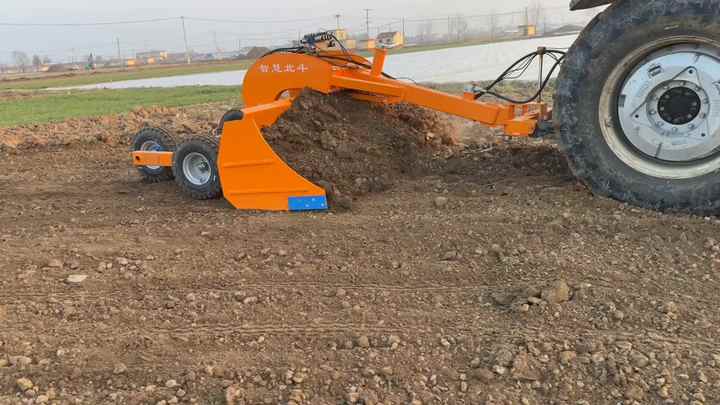
In regions like the Murray-Darling Basin or Ord River irrigation schemes, precise leveling minimizes runoff and ponding, critical for sustainable water use amid ongoing drought challenges. Operators find that a well-matched shaft prevents power interruptions, allowing uninterrupted passes over large areas and achieving slopes as fine as 0.1 percent for flood irrigation efficiency.
Western Australia Broadacre Leveling Challenges and Solutions
Western Australia’s wheatbelt features expansive fields where satellite levelers pull wide blades up to 15 meters, demanding shafts that handle substantial torque without flexing or vibrating excessively. Farmers here deal with sandy soils and occasional rocky outcrops, requiring robust universal joints that absorb shocks while maintaining alignment with GPS receivers mounted on the blade. Over the past decade working with growers from Geraldton to Esperance, we’ve seen how shafts with reinforced yokes and high-grade steel tubing reduce downtime during critical pre-seeding operations. One operator near Merredin shared how upgrading to a heavier series shaft eliminated frequent joint failures in abrasive conditions, allowing completion of 500-hectare blocks in single sessions without stops for repairs. The key lies in balancing dynamic forces at typical operating speeds of 8-12 km/h, where even minor imbalances amplify over long distances. Our designs incorporate precision-ground crosses and sealed bearings that extend grease intervals to 100 hours, suiting remote operations where daily maintenance time is limited. In saline areas around the Avon Valley, corrosion-resistant coatings prove essential, preventing pitting that could lead to premature fatigue. Pairing these with overrunning clutches protects the system when lifting on headlands, avoiding inertia-driven surges back to the tractor. Local agronomists note yield improvements of 10-15 percent in leveled versus uneven fields, directly tied to even emergence and nutrient uptake. Dust ingress remains a constant battle, so triple-lip seals on telescoping sections keep contaminants out, preserving smooth extension during turns. Overall, these adaptations reflect years of field feedback, ensuring shafts perform reliably through harvest dust storms and winter rains alike.

Further south in the Great Southern region, mixed farming enterprises use levelers post-deep ripping to smooth soil profiles, where shafts must tolerate higher peak loads from compacted subsoils. Experiences from Albany growers highlight the value of wide-angle joints for navigating undulating country without power loss at extreme angles.
Core Technical Parameters for Satellite Land Leveler Drive Shafts
Selecting the appropriate shaft demands attention to multiple factors influenced by implement width, tractor power, and soil type. The following 28 parameters represent essential considerations based on extensive applications:
| Parameter | Description | Typical Specification |
|---|---|---|
| 1. Series Designation | Load capacity category | Series 6 to 8 |
| 2. Tractor Spline | PTO connection | 1-3/8″ 21-spline or 1-3/4″ 20-spline |
| 3. Implement Yoke | Blade gearbox input | Bolt-on flange or spline |
| 4. Minimum Length | Closed position | 1100-1400 mm |
| 5. Maximum Length | Fully extended | 1600-2200 mm |
| 6. Torque 540 rpm | Standard rating | 800-1500 Nm |
| 7. Torque 1000 rpm | High-speed option | 600-1200 Nm |
| 8. HP Capacity | Continuous power | 80-200 HP |
| 9. Tube Profile | Strength geometry | Lemon or star |
| 10. Safe Overlap | Operating minimum | 300-400 mm |
| 11. Cross Size | Bearing diameter | 30-40 mm |
| 12. Quick Release | Yoke mechanism | Push-pin or collar |
| 13. Shielding | Safety cover | Integrated plastic |
| 14. Protection Device | Overload | Ratchet clutch |
| 15. Clutch Torque | Slip setting | 1000-2000 Nm |
| 16. Total Weight | Assembly mass | 30-50 kg |
| 17. Angle Capability | Maximum deflection | 35-50 degrees |
| 18. Extension Stroke | Telescopic range | 400-700 mm |
| 19. Tube Material | Steel grade | DOM or ST52 |
| 20. Lubrication Interval | Grease schedule | 50-100 hours |
| 21. Retention Chains | Guard security | Standard dual |
| 22. Standard Compliance | Safety cert | ASABE S331 |
| 23. Balance Grade | Vibration spec | G6.3 minimum |
| 24. Shear Element | Backup protection | Grade 10.9 bolt |
| 25. Wall Thickness | Tube durability | 4.5-6 mm |
| 26. Corrosion Protection | Surface finish | E-coat plus powder |
| 27. Wide Angle Kit | Turn enhancement | 80 degree option |
| 28. Expected Life | Operational hours | 3000-6000 hours |
Queensland Irrigation District Practical Insights
Queensland’s sugarcane and cotton zones rely heavily on laser or satellite levelers for furrow and bankless channel systems, where shafts face prolonged exposure to moisture and fine silt. Growers around Bundaberg and Emerald emphasize the need for sealed joints that resist water ingress during flood irrigation setups. In one case from the Burdekin, a cooperative upgraded multiple units with our corrosion-resistant shafts after standard ones failed within two seasons due to rust in universal joints. The switch allowed uninterrupted winter leveling programs, preparing bays precisely for ratoon crops. Hydraulic tilt functions add complexity, requiring shafts that maintain phase alignment under side loads from blade adjustments. Feedback highlights how proper phasing eliminates vibration that could interfere with GPS signal stability. In tropical heat, thermal expansion becomes noticeable, so generous telescoping travel prevents binding. Many operations run at night to avoid wind affecting laser planes, placing extra demands on guard integrity for operator safety. Integrating overrunning clutches proves valuable when stopping heavy blades quickly. Local dealers stock common cross kits for rapid repairs during busy periods. Overall, these experiences shape designs that prioritize longevity in humid, abrasive environments while supporting accuracies down to centimeters for water savings estimated at 20-30 percent.
Similar patterns emerge in the Lockyer Valley horticulture areas, where smaller tractors pull compact levelers for vegetable beds, favoring lighter yet durable shafts.
Comparison to Established Brands
Australian Driveshaft Pty Ltd products hold their own in direct field comparisons, particularly in harsh dust and heat. While certain European brands (for technical reference only, Australian Driveshaft Pty Ltd is an independent manufacturer) offer solid baseline performance, our shafts feature upgraded sealing and thicker tubing better suited to local abrasive soils, resulting in longer service intervals.
Operators report smoother power delivery and fewer clutch adjustments compared to some imports.
Critical Components and Maintenance Items
- Cross bearing kits – monitor for play exceeding 3 mm
- Ratchet clutch springs – adjust seasonally
- Full guarding assemblies – check for wear
- High-tensile shear bolts – stock multiples
- Sliding tube sections – clean thoroughly
- Anti-rotation chains – verify attachment
Power System Selection Points Summary
Begin assessment with tractor PTO rating and expected blade width. Factor in soil resistance for torque needs, prioritize sealing for dust-prone areas, and confirm overlap meets safety margins per Australian standards.
<iframe src=”https://www.youtube.com/embed/Y_-W-MZ7BF8″ title=”Wide Land Leveler in Action Australia”></iframe>

Complementary Gearboxes from Australian Driveshaft Pty Ltd
Our gearbox range complements satellite leveler drive shafts perfectly, offering robust units designed for the unique demands of precision land forming across Australia’s diverse landscapes. Starting with compact models for 4-6 meter blades suitable for horticultural applications in Victoria’s Goulburn Valley, these feature spiral bevel gears in oil-bath housings delivering quiet operation at inputs up to 100 HP. Ratios are carefully selected to maintain blade speeds that optimize soil flow without excessive throwing, typically around 150-200 rpm depending on soil type.
Moving to mid-range offerings for 8-12 meter units common in New South Wales riverina irrigation layouts, cast iron casings with reinforced mounting plates withstand the side loads from hydraulic wing folding mechanisms. Integrated cooling fins manage heat buildup during extended summer sessions in temperatures exceeding 40 degrees Celsius. Tapered roller bearings sized for prolonged radial loads ensure alignment stability critical when GPS controllers demand consistent blade positioning.
For broadacre operations in South Australia’s Mallee or Western Australia’s central wheatbelt, heavy-duty gearboxes handle inputs to 250 HP with multi-speed options allowing operators to match ground speed variations in variable soils. Quick-shift levers enable on-the-go ratio changes without stopping, maximizing productivity over thousands of hectares. Sealed input shafts mate directly with our drive shafts for seamless power transfer.
All models incorporate drain ports for easy maintenance in remote locations and sight glasses for quick oil level checks. Optional pass-through PTO outputs support additional hydraulic pumps for mast lifting or wing controls without separate drives. Recent developments include sensor ports for integrating with farm management software, monitoring temperature and vibration in real time.
Specialized planetary reduction units provide extra low-speed torque for initial cuts in hardpan soils post-ripping, common in Queensland’s black soil plains. Lightweight alloy versions reduce overall implement weight for smaller tractors in mixed farming systems around Tasmania’s dairy regions.
Custom spline configurations match virtually any tractor output, while flange-mounted variants bolt directly to scraper gearboxes from leading manufacturers. Rigorous testing includes 1000-hour endurance runs simulating dusty field conditions, followed by tear-down inspections to verify component integrity.
Accessory lines extend to bevel gear repair kits, crown wheel sets, and complete input shaft assemblies for quick field rebuilds. Farmers appreciate the availability of exploded diagrams and torque specifications for confident servicing.
In pasture renovation projects across New Zealand-influenced high rainfall zones of southeast Australia, our gearboxes paired with wide-angle drive shafts enable contour following that preserves topsoil structure while achieving precise grades.
Recent feedback from northern territory trials highlights benefits in tropical savanna soils, where enhanced sealing prevents fine particle ingress that plagued earlier designs.
Integration with autonomous tractor platforms emerging in 2026 trials positions these gearboxes for future-ready operations, with CAN-bus compatibility for automated depth control.
Comprehensive warranty coverage includes on-farm support in major grain growing areas, backed by stocked parts warehouses in Perth, Adelaide, and Brisbane for minimal downtime during critical windows.
Ultimately, combining our gearboxes with matched drive shafts creates complete power solutions that deliver the precision and reliability demanded by modern satellite-guided leveling technology across every Australian farming context.
In Victoria’s Wimmera, dryland croppers use our 150 HP rated units for post-harvest stubble incorporation leveling, achieving sub-centimeter accuracy that enhances no-till seeding performance.
Recent developments in the sector point to increased adoption of precision leveling equipment amid efforts to improve water use efficiency, with reports from industry events noting stronger reliability in driveline components as key to wider uptake.
Frequently Asked Questions
How do I determine the correct shaft length for my satellite leveler?
Lower the implement on flat ground and measure from tractor PTO to gearbox input. Add allowance for full lift without separation and working overlap of 300 mm minimum.
What protection is best against hidden obstacles?
Ratchet clutches provide repeatable slip without resetting, ideal for variable soils with rocks.
Why choose wide-angle joints?
They maintain power through sharp turns common when following contours.
How frequently grease in dusty conditions?
Every 20-30 hours, focusing on telescoping sections.
Can I use 1000 rpm PTO?
Only with matching shaft and gearbox ratings to avoid overload.
Signs of impending joint failure?
Clicking noises or visible play in crosses.
Importance of proper phasing?
Aligns yokes to minimize vibration affecting GPS accuracy.
Best storage practice?
Collapse fully and support off ground to prevent sagging.
Compatibility with autonomous tractors?
Our balanced designs reduce vibration for sensor stability.
When to replace guards?
Immediately if cracked or deformed for safety compliance.