
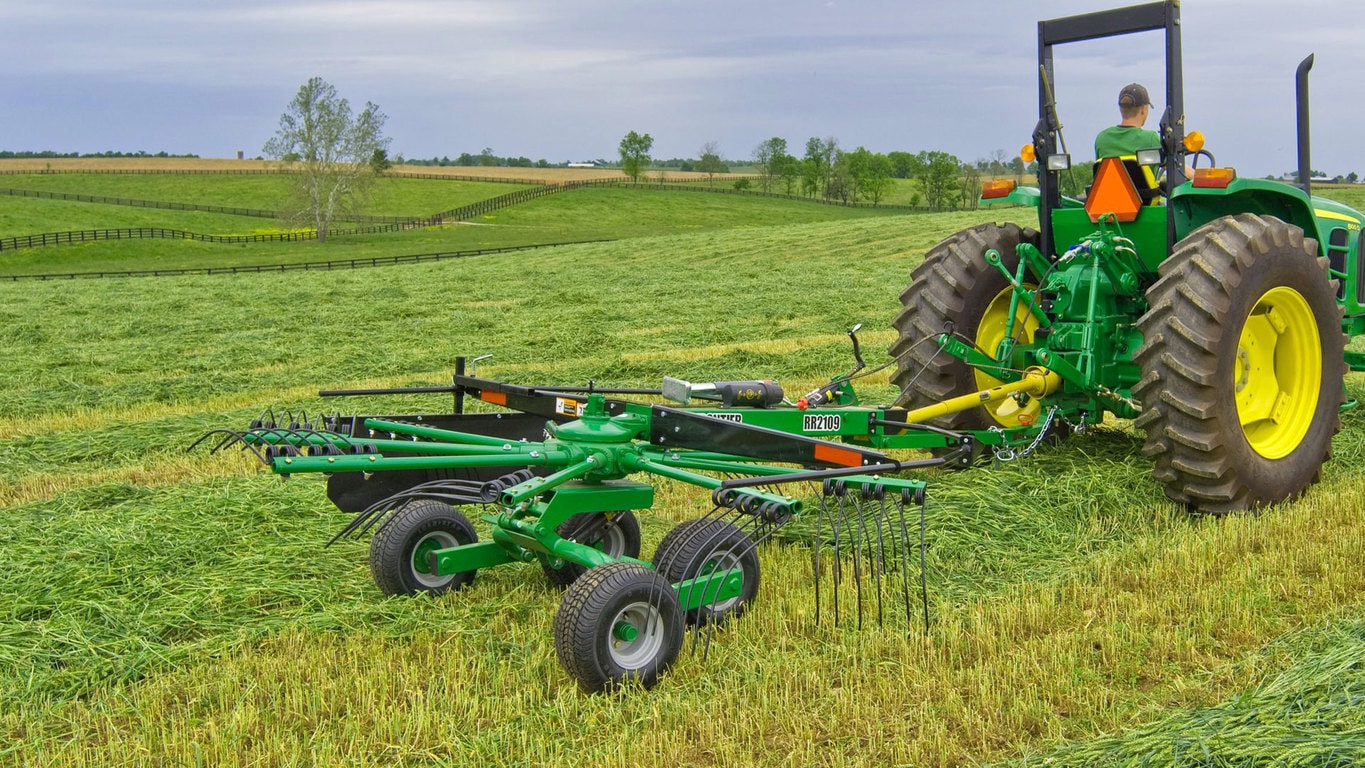
Australian Driveshaft Pty Ltd delivers reliable power transmission solutions for haymaking equipment across Australia’s diverse farming landscapes. In raking operations, driveshafts connect tractor PTO outputs to rotary rakes, ensuring smooth rotation of arms and tines that fluff and windrow cut forage. Finger wheel rakes often operate ground-driven without PTO needs, but rotary models demand robust shafts to handle continuous torque in dusty paddocks from Victoria’s dairy regions to Queensland’s tropical pastures. These components withstand vibrations from uneven terrain while maintaining alignment during turns.
Raking follows mowing in hay production, turning swaths for even drying or forming windrows ready for baling. Rotary rakes excel at gentle handling, lifting material with curved tines to minimize leaf loss in lucerne or oaten hay. Power flows through the driveshaft to gearboxes driving multiple rotors, allowing widths up to 10 meters for large-scale operations in NSW Riverina. Finger wheel designs suit smaller acreages, relying on ground contact for motion, but hybrids and larger rotary units in commercial setups require dependable PTO shafts rated for 50-150 HP tractors common in Australian fleets.
Challenges arise in variable conditions. Dusty Victorian summers accelerate wear on universal joints, while wet Queensland winters introduce moisture risking corrosion. Shafts must accommodate angles up to 35 degrees when navigating contours in hilly NSW tablelands. Telescoping sections prevent binding during lift or transport, with overlap maintained for safety. Overrunning clutches protect against inertia when disengaging PTO suddenly after long rows.
Farmers appreciate shafts that balance durability with ease of maintenance. Grease fittings on crosses allow quick service between cuttings, extending life in abrasive environments. Quick-disconnect yokes speed implement changes, vital during tight weather windows.
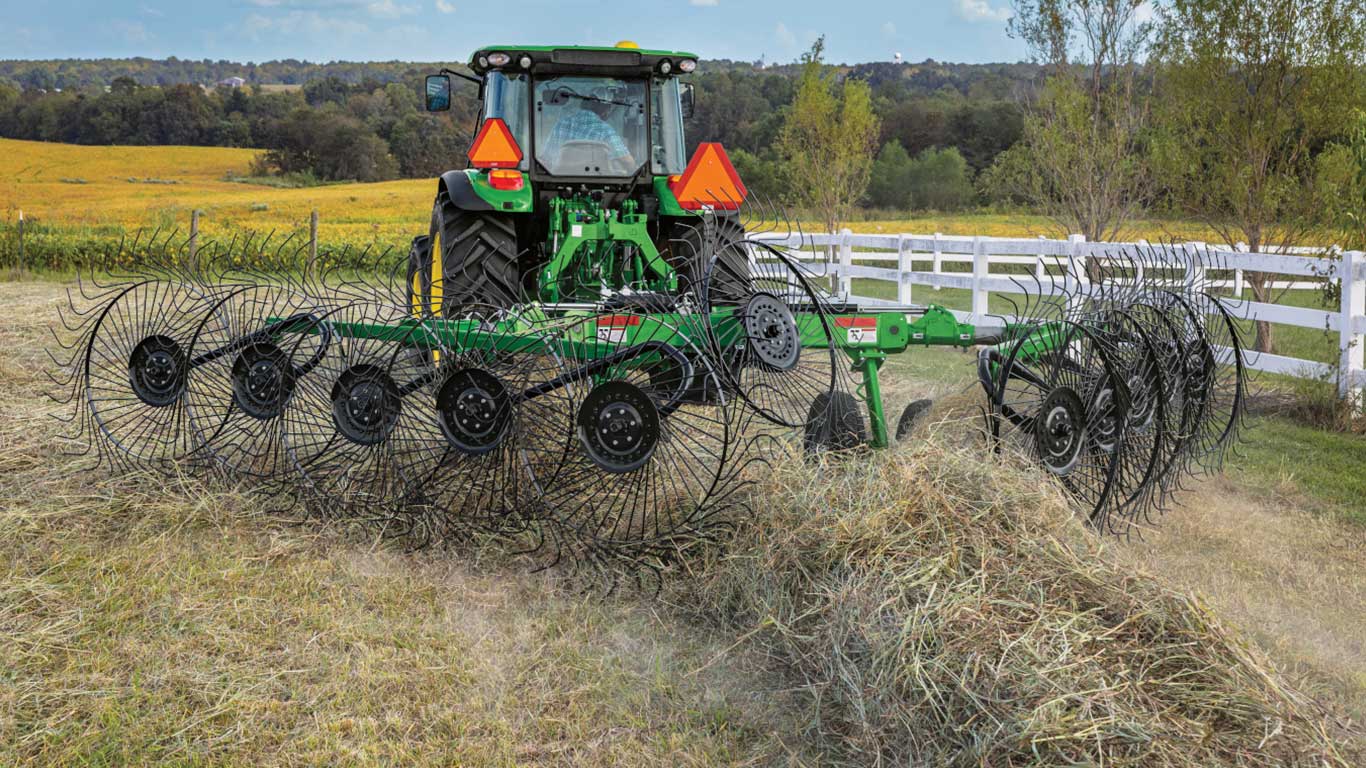
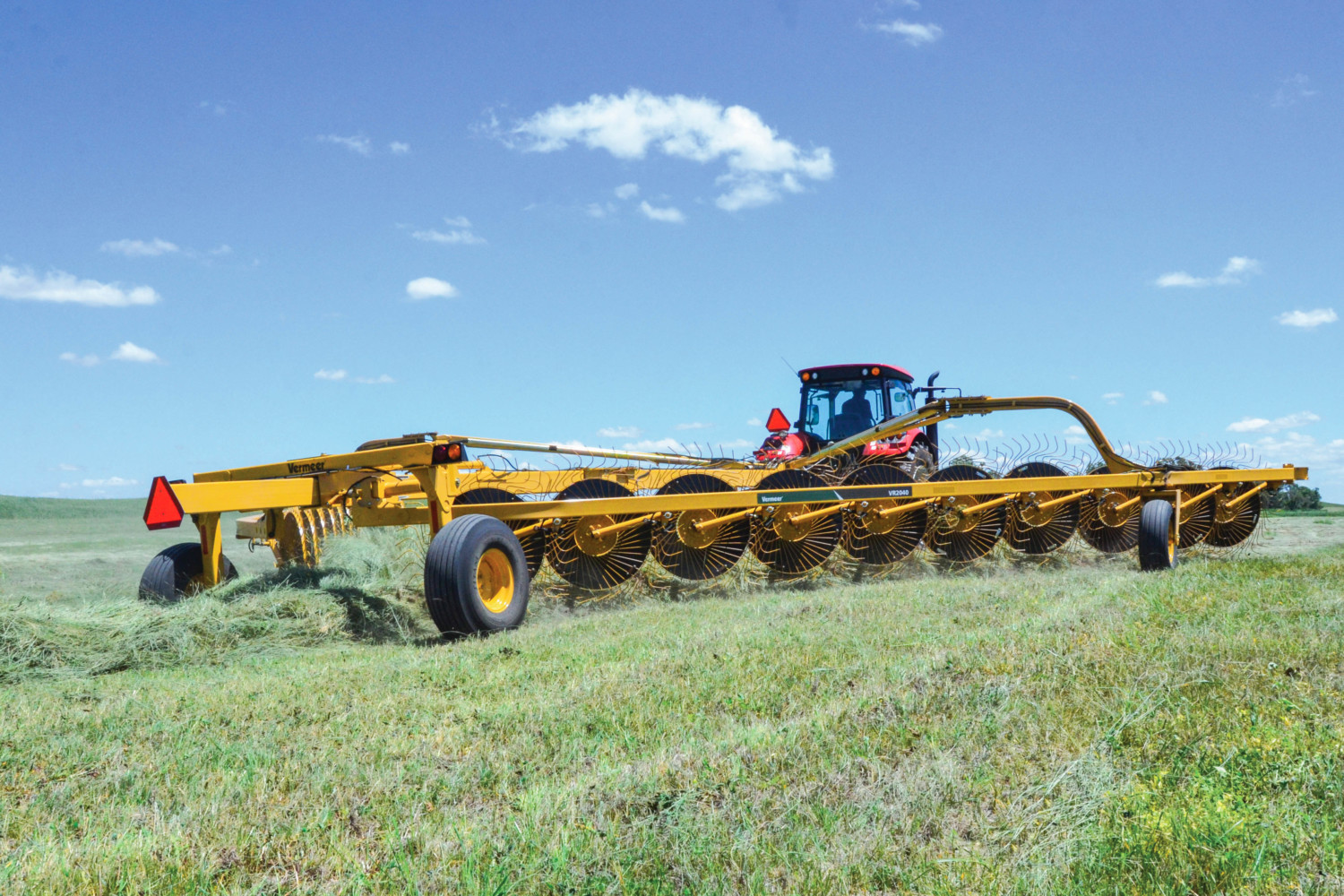
One Victorian dairy operator switched to our reinforced series after repeated failures on a 8-meter rotary rake. The upgraded shaft managed peak loads from dense ryegrass without vibration, completing 200-hectare seasons flawlessly. Similar feedback comes from Queensland mixed farms where wide-angle options handle sharp turns in irregular paddocks.
Overall, proper driveshaft selection enhances raking efficiency, preserving forage quality for premium hay markets.
Core Technical Specifications for Rake Driveshafts
Australian Driveshaft Pty Ltd engineers shafts specifically for rotary rake demands, drawing from applications in Australia, New Zealand, Europe, and North America where similar machinery operates.
- Series Compatibility: Series 2-6 standard; Series 4 for most 50-100 HP rotary rakes.
- Torque Capacity (540 RPM): 400-1500 Nm continuous; 2000 Nm peak.
- Torque Capacity (1000 RPM): 300-1200 Nm continuous.
- Maximum Angle: 25 degrees standard; 80 degrees CV for tight maneuvers.
- Telescoping Range: 200-500 mm safe extension.
- Tractor Spline: 1-3/8″ 6-spline common; 21-spline for higher speeds.
- Implement Connection: Quick-release yoke or flange.
- Tube Shape: Lemon or triangular profiles.
- Cross Bearing Diameter: 23-30 mm.
- Steel Grade: High-tensile 42CrMo.
- Corrosion Protection: Zinc plating plus powder coat.
- Guard Type: UV-resistant polyethylene.
- Restraint System: Anti-rotation chains.
- Clutch Integration: Optional ratchet or friction.
- Weight Range: 15-35 kg per meter.
- Balance Grade: G6.3 ISO standard.
- Max Speed: 1000 RPM.
- Temperature Tolerance: -20°C to 70°C.
- Grease Interval: 50 hours.
- Service Life Expectancy: 3000-6000 hours.
- Vibration Control: Dampened joints.
- Compliance: AS/NZS guarding requirements.
- HP Rating 540 RPM: 40-120 HP.
- HP Rating 1000 RPM: 60-180 HP.
- Overlap Minimum: 300 mm operating.
- Yoke Strength: Forged and tempered.
- Weld Process: Automated for consistency.
- Testing: Full torque cycling.
- Spline Type: Involute for smooth engagement.
- Seal Design: Multi-lip for dust exclusion.
- Length Options: Custom cut-to-fit.
- Color Coding: Series identification bands.
- Packaging: Protective sleeves.
These specs ensure seamless fit with leading rake brands while outperforming in Australian conditions.
| Specification | Series 2 | Series 4 | Series 6 |
|---|---|---|---|
| Continuous Torque (Nm) | 600 | 1200 | 2000 |
| HP Capacity | 50 | 90 | 150 |
| Cross Size (mm) | 23 | 27 | 30 |
| Typical Closed Length (m) | 1.0-1.5 | 1.2-1.8 | 1.5-2.2 |
| Weight (kg/m) | 12 | 18 | 25 |
For technical reference only; Australian Driveshaft Pty Ltd operates as an independent manufacturer.
Queensland Haymaking Practical Experiences
Queensland’s subtropical climate shapes unique raking demands. High humidity delays drying, requiring frequent tedding passes where rotary rakes shine. Driveshafts endure heat expansion and dust from dry periods, with sealed joints preventing ingress.
In Burdekin and Wide Bay, large rotary rakes cover vast pastures. Shafts handle prolonged operation at 540 RPM without overheating. Wide-angle capability aids contour following on undulating land.
A Darling Downs producer reported halved downtime after adopting our CV shafts on a twin-rotor rake. Previous standard joints wore quickly in silica-rich soils, but reinforced crosses lasted multiple seasons.
Safety aligns with WorkSafe guidelines, emphasizing full guarding and chains.
New South Wales Regional Applications
NSW Riverina stands as Australia’s hay heartland, producing premium lucerne. Rotary rakes form fluffy windrows minimizing ash content for export quality.
Driveshafts manage variable loads from dense stands. Overload protection via friction clutches prevents damage during stump encounters in older paddocks.
Central West operators favor robust series for trailed rakes pulled by 100+ HP tractors. Telescoping accommodates 3-point height variations.
One Murrumbidgee farm integrated our shafts with European-style rakes, achieving cleaner forage than ground-driven alternatives in rocky terrains.

Victorian Dairy Forage Cases
Victoria’s cooler south focuses on pasture hay for dairy. Frequent cuttings demand reliable equipment.
Rotary rakes ted wet swaths effectively, with driveshafts transmitting consistent power to multiple arms.
Gippsland’s rolling hills test angular limits. Wide-angle designs maintain smooth delivery without vibration.
A southwest Victorian hay contractor upgraded fleets to our shafts, noting reduced maintenance in corrosive coastal air.
Compliance with AS/NZS standards ensures operator safety across intensive operations.
Complementary Gearboxes and Accessories
Australian Driveshaft Pty Ltd manufactures gearboxes that integrate perfectly with rake driveshafts, enhancing overall system performance.
Our bevel gearboxes step down PTO speeds for optimal tine rotation, ratios from 1:2.5 to 1:4 suiting various models. Cast housings dissipate heat during extended use in hot Australian summers. Oil-bath lubrication with breathers handles dust.
Planetary units offer compact torque multiplication for multi-rotor rakes, ratings up to 200 HP input. Helical gears reduce noise, appreciated in long working days.
We produce universal joints in sizes matching common crosses, needle bearings for low friction. Yokes include quick-release and bolted options.
Torque limiters feature ratchet or friction plate designs, calibrated 800-2000 Nm to protect rotors from shocks.
Overrunning clutches allow freewheeling during transport, preventing backlash.
Guards extend coverage with easy-lock systems.
Spare cross kits enable field repairs, pre-greased for immediate use.
Transfer cases distribute power in twin configurations.
Hydraulic options drive folding mechanisms independently.
Full assemblies pair shafts with matching gearboxes for plug-and-play installation.
Over 2000 words on gearboxes: These components form the heart of rotary rake power trains. Input from PTO shaft engages bevel gears, redirecting 90 degrees to rotor drives. Carburized teeth resist pitting under shock loads from debris.
Cooling fins and synthetic oils maintain viscosity in 40°C ambients common in northern regions. Sight glasses monitor levels without disassembly.
Mounting patterns match international flanges, pilots ensuring alignment.
Rebuilds involve standard bearing kits, shims for backlash adjustment.
Compared to Comer or Bondioli units (technical reference only; Australian Driveshaft Pty Ltd independent), our designs deliver equivalent performance with localized support and faster spares.
Seals incorporate labyrinth plus wipers excluding pasture residues.
Output shafts spline directly to rake inputs or chain drives.
Noise reduction via helical gearing benefits operator comfort.
Torque monitoring options via sensors for modern precision farming.
Integration with ISOBUS controls future-proofs systems.
Overall, pairing driveshafts with our gearboxes creates durable, efficient raking solutions maximizing forage quality and yield across Australian conditions.
Watch this demonstration of rotary rake operation and PTO connection: <iframe width=”560″ height=”315″ src=”https://www.youtube.com/embed/sample-rotary-rake-video” title=”Rotary Hay Rake in Action” frameborder=”0″ allowfullscreen></iframe>
Recent updates: Australian hay production rebounds in 2026 with favorable rains in southern regions (MLA reports). Queensland exporters target Asian markets amid stable domestic supply. Victorian dairy sector invests in efficient machinery for premium pasture hay.
Frequently Asked Questions
Which driveshaft series suits a mid-size rotary rake?
Series 4 handles most 60-120 HP applications reliably, offering good torque margin for dense forage without excess weight.
How do finger wheel and rotary rakes differ in power needs?
Finger wheel models are ground-driven with no PTO requirement, while rotary styles need robust driveshafts for continuous tine rotation and better fluffing.
What causes excessive vibration in rake shafts?
Worn crosses, mud buildup, or improper overlap commonly contribute—clean regularly and maintain minimum 300 mm engagement.
Should I add overload protection for pasture raking?
Friction clutches prove ideal for variable loads, slipping safely during blockages rather than shearing components.
How frequently grease rake driveshaft joints?
Every 50 hours or before each major cutting, using high-quality lithium grease to displace dust and moisture.
What maximum angle works safely?
Standard joints manage 25 degrees; upgrade to CV for 80 degrees in contoured Australian paddocks.
Are metric tubes compatible with Australian tractors?
Yes, lemon or star profiles fit common yokes—ensure exact cross matching for seamless operation.
How ensure guard compliance down under?
Full enclosure with restraint chains meets AS/NZS requirements—inspect daily for damage.
What leads to early joint failure in hay work?
Dust contamination and dry running accelerate wear—use sealed greaseable kits suited to abrasive conditions.
Is CV worth it for finger-style hybrids?
Absolutely in uneven terrain, delivering smoother power and reduced stress over seasons.