
Australian Driveshaft Pty Ltd delivers robust drive shafts engineered for the diverse mowing needs across Australia’s expansive pastures, hay fields, and turf operations. From vast cattle stations in Queensland to intensive dairy farms in Victoria, mowers—whether reciprocating sickle bars for precise cutting, high-speed disc models for heavy hay, or durable drum types for rough terrain—rely on reliable power transmission to maintain productivity during critical seasons.
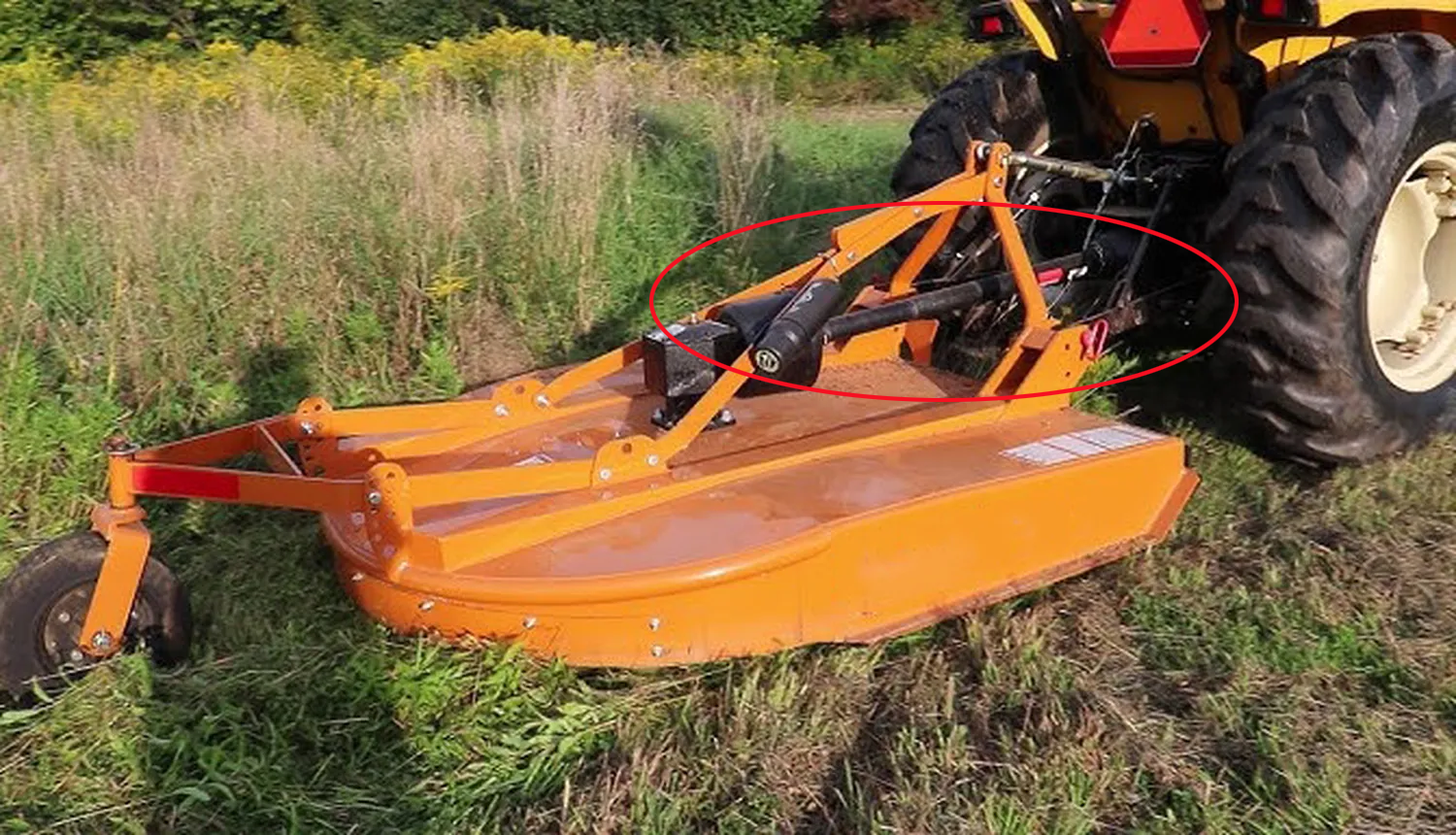
Core Power Transmission in Various Mower Designs
Mowers transform tractor power into efficient cutting action through the PTO drive shaft, which bridges the tractor’s output to the mower’s gearbox or direct drive system. In Australia, where properties often span thousands of hectares and terrain varies from flat riverine plains to hilly tablelands, these shafts must handle constant angular changes, high vibrations from uneven ground, and exposure to dust, grass clippings, and moisture.
Reciprocating mowers, commonly used for finishing turf or roadside maintenance in regions like the Hunter Valley, feature a back-and-forth blade motion driven by an eccentric mechanism connected via the drive shaft. This setup demands shafts with excellent torsional flexibility to absorb the reciprocating loads without fatigue. Disc mowers dominate hay production in the Murray-Darling basin, where multiple spinning discs shear crop at high speeds; here, shafts transmit steady torque to the cutterbar gearbox, often at 1000 RPM for wider cuts up to 3 meters or more.
Drum mowers excel in tougher conditions, such as the rugged pastures of Western Australia’s wheatbelt or New South Wales’ slopes, with rotating drums carrying free-swinging blades that handle thick, lodged crop. The drive shaft powers a series of gears or belts within the mower frame, requiring high torque capacity to start under load. Across all types, Australian operators value shafts that minimize downtime—over years supplying farms from Tasmania’s cool climates to Northern Territory’s tropical grasses, we’ve seen properly matched drive shafts extend mower life significantly by reducing stress on bearings and gears.
In mixed farming systems prevalent in South Australia, where hay cutting follows cereal harvest, drive shafts with quick-connect yokes allow fast switching between implements. Overrunning clutches integrated into the shaft prevent inertial damage when disengaging, particularly useful in drum mowers with heavy rotating mass.
Technical Specifications for Mower Drive Shafts
| Parameter | Description | Typical Range for Australian Mowers |
|---|---|---|
| Operating RPM | PTO speed compatibility | 540 or 1000 RPM |
| Torque Capacity | Maximum continuous load | 800 to 2500 Nm |
| Angular Operating Angle | Misalignment tolerance | Up to 35 degrees standard, 80 degrees wide-angle |
| Telescoping Travel | Length adjustment range | 400 to 800 mm |
| Tube Profile | Shape for torque transmission | Triangular, lemon, or star |
| Universal Joint Size | Cross bearing dimensions | 23.8×61.3 mm to 35×106.5 mm |
| Tractor Yoke Spline | Common Australian fittings | 1-3/8″ 6-spline or 21-spline |
| Implement Yoke Type | Mower gearbox connection | Quick-disconnect or bolt-on |
| Guard Rotation | Safety shield freedom | Full 360 degrees with bearing |
| Balance Quality | Vibration reduction | ISO G6.3 or better |
| Extended Length | Maximum working span | 1200 to 2200 mm |
| Minimum Overlap | Safety requirement | At least 200 mm or 1/3 tube length |
| Torque Limiter Option | Overload protection | Friction clutch 1500-3000 Nm |
| Bearing Life | Greased cross journals | 300-600 hours |
| Sealing Rating | Dust and debris protection | Multi-lip, IP55 equivalent |
| Material Strength | Tube and yoke | High-yield St52 steel |
| Weight | Per meter assembly | 12-20 kg |
| Wide-Angle Capability | For sharp turns | 50-80 degrees CV joint |
| Shear Bolt Grade | Safety device | 8.8 M10-M14 |
| Friction Discs | Clutch configuration | 4-8 plates asbestos-free |
| Dynamic Test Speed | Factory balancing | Up to 1200 RPM |
| Coating | Corrosion resistance | Powder coat or e-coat |
| Temperature Range | Australian extremes | -15°C to 75°C |
| Impact Guard Material | Debris protection | High-density polyethylene |
| Grease Interval | Maintenance | Every 40-80 hours |
| Power Rating | At 540 RPM | 50-200 HP |
| Forging Process | Yoke strength | Cold or hot forged |
| Quick Release | Connection ease | Push-pin or auto-lock |
| Compliance | Safety standards | AS/NZS 4024 and ISO 5674 compatible |
| Overrunning Clutch | Inertia protection | Cam or ratchet type |
| Tube Wall Thickness | Durability | 3-5 mm |
| Spline Length | Engagement security | Minimum 50 mm |
| Vibration Dampening | Ride comfort | Internal liners optional |

Victorian Dairy Pasture Mowing Practical Experiences
In Victoria’s fertile Gippsland region, where dairy farms maintain lush ryegrass and clover pastures for year-round grazing, disc mowers paired with reliable drive shafts achieve cutting widths over 3 meters at speeds exceeding 15 km/h. Farmers here face wet conditions and stony soils that test shaft durability daily. One long-term client near Warragul reported switching to our reinforced triangular profile shafts after repeated failures with lighter imports; the upgrade allowed uninterrupted operation through spring flushes, covering 50 hectares per day without vibration-induced fatigue on the mower gearbox.
The constant lifting and lowering over contours demands shafts with ample telescoping and angular freedom. Wide-angle joints prove essential when turning at headlands near irrigation channels. In drier northern Victorian irrigated pastures, dust from lucerne hay cutting accelerates wear on seals—our multi-lip designs have consistently outperformed standard options, extending service life beyond 1000 hours in these abrasive environments.
Comparisons with European brands like Comer or Bondioli & Pavesi (for technical reference only, Australian Driveshaft Pty Ltd is an independent manufacturer) show our locally adapted shafts better withstand the UV degradation common in Australian conditions, thanks to specialized coatings and materials tuned for local climates.

Queensland Rough Terrain Drum Mower Challenges
Queensland’s beef properties often feature drum mowers for controlling woody weeds and thick native grasses in undulating country. The high inertial loads when starting in heavy crop require shafts with robust torque limiters to prevent tractor stall or component damage. Operators in the Darling Downs appreciate overrunning clutches that allow freewheeling during transport, reducing wear on the mower drums.
Extreme heat and dust in summer mowing campaigns push seals to limits—our experience supplying stations near Longreach highlights how proper greasing and guarded designs maintain performance where others fail prematurely. One contractor servicing multiple properties noted fewer breakdowns after standardizing on our heavy-duty series, attributing it to better balance minimizing resonance in long-span configurations over rough ground.
Reciprocating sickle bars still find use in smaller acreage or specialty turf near Brisbane, where precise low cuts are needed; compact shafts with shear bolt protection safeguard against hidden obstacles common in floodplain areas.
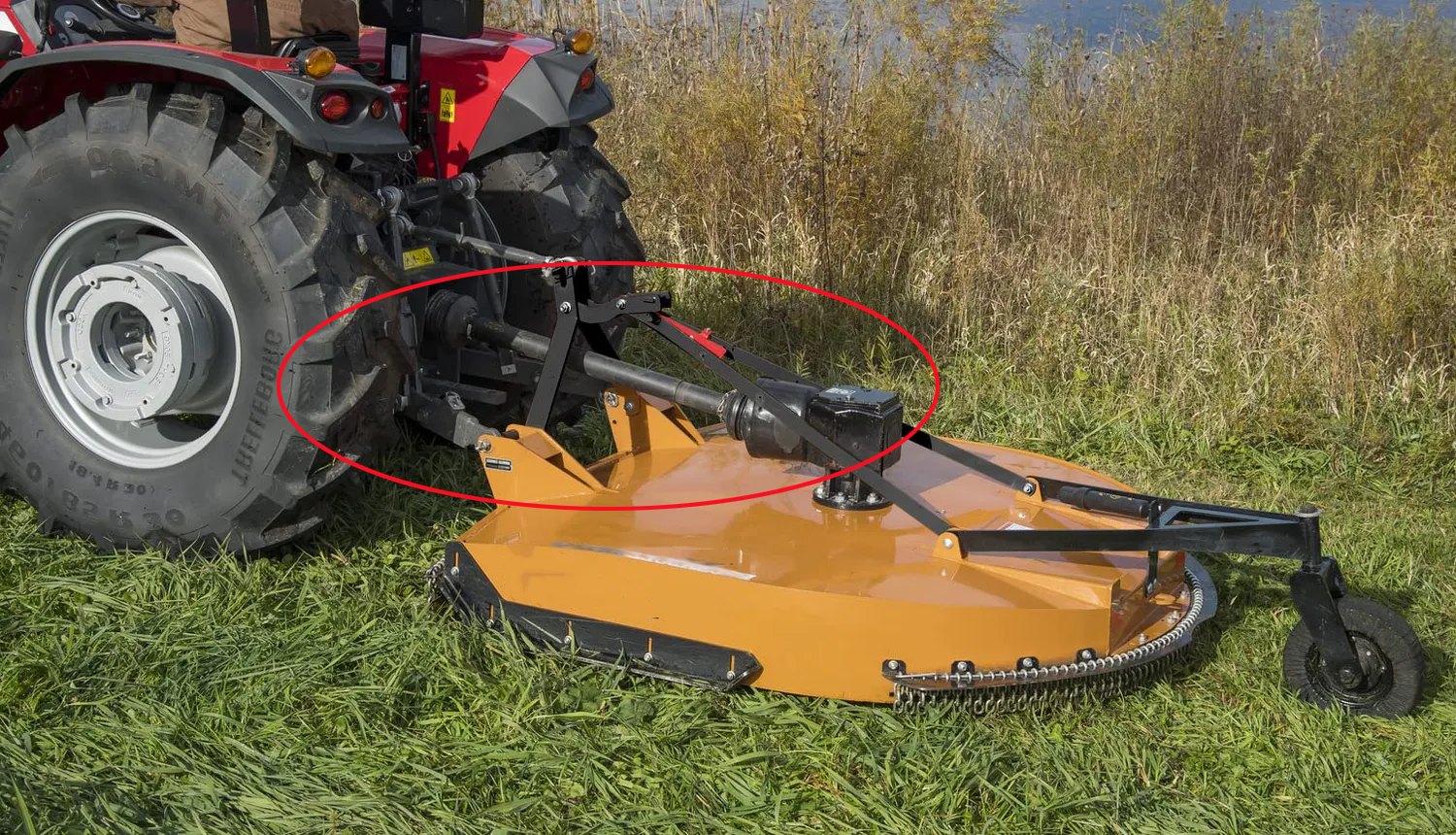
Complementary Gearboxes and Accessories from Australian Driveshaft Pty Ltd
Australian Driveshaft Pty Ltd produces an extensive lineup of gearboxes optimized for mower applications, ensuring seamless integration with our drive shafts for superior field performance. Our bevel gearboxes, commonly used in disc mower cutterbars, feature spiral bevel gears for quiet, efficient power redirection at 1:1 or higher ratios, handling speeds up to 1000 RPM with minimal backlash. Cast from durable alloys with precision machining, these units resist the constant shock loads from uneven cutting, incorporating sealed bearings that thrive in grass residue-heavy environments typical of Australian hay operations.
For drum mowers requiring robust torque multiplication, our parallel shaft gearboxes deliver reductions from 1:2 to 1:4, ideal for powering multiple drums in wider configurations. High-capacity models support over 150 HP, with helical gearing reducing noise during long days in the paddock. Oil-bath lubrication and vented housings prevent pressure buildup in hot conditions, while multiple output options match various drum spacings found on local equipment.
Reciprocating mower drives benefit from our eccentric or pitman gearboxes, converting rotational input to linear blade motion with adjustable stroke lengths. These compact designs mount directly to sickle bars, featuring hardened components for longevity in fine turf or roadside work. Integrated shear pins provide instant protection against hidden obstacles.
Beyond gearboxes, we manufacture complete safety clutches—including ratchet torque limiters that engage precisely at set loads, preventing overload in lodged crop. Friction disc assemblies with 6-8 plates offer adjustable slip for varying conditions, asbestos-free linings ensuring environmental compliance. Overrunning clutches in cam or roller designs allow safe coasting, essential for heavy rotary components.
Universal joint kits in multiple sizes facilitate quick field repairs, while yoke forgings in cold-extruded steel provide superior strength at connection points. Custom spline adapters bridge older tractor outputs to modern mower inputs, extending equipment usability. Protective guarding systems with integrated chains and UV-resistant plastics meet stringent Australian requirements, complete with bearing rings for smooth rotation.
Additional accessories include telescoping tube assemblies for seasonal length changes, quick-release mechanisms for fast implement swaps, and maintenance kits with specialized greases formulated for high-dust resistance. Cross journal rebuild packs restore worn joints economically. For enhanced monitoring, optional vibration sensors integrate with tractor systems, alerting to imbalance early.
Our worm gearboxes serve auxiliary functions like conditioner roll drives in mower-conditioners, offering high reductions in compact packages. Planetary units provide torque boosting for self-propelled models emerging in larger operations. All products undergo rigorous testing simulating Australian field stresses—thermal cycling, dust ingestion, and impact loads—to guarantee reliability.
These integrated solutions lower total ownership costs through matched performance and local availability of spares. Farmers across states report smoother operations and reduced repairs when combining our shafts with complementary gearboxes, creating dependable power trains tailored to local mowing demands. (Detailed specifications, mounting diagrams, and capacity charts expand this compatibility further, supporting informed selections for specific mower models.)
Recent developments in Australian hay equipment emphasize efficiency gains, with 2025-2026 seasons showing strong demand for durable components amid favorable weather in key regions. Updates on machinery standards continue to prioritize operator safety nationwide.
Frequently Asked Questions
How do I measure the correct drive shaft length for my mower?
Park the tractor and mower on level ground with the implement at working height. Measure from tractor PTO groove to mower input groove in both raised and lowered positions. Select a shaft that allows 200-300 mm overlap when fully compressed and sufficient extension without separating.
What causes excessive vibration in mower drive shafts?
Common culprits include grass buildup, worn crosses, or improper phasing of universal joints. Check for tube damage from rocks and ensure balance meets standards. Regular greasing every 40 hours prevents seizure in grassy conditions.
Is a wide-angle shaft necessary for trailed mowers?
Absolutely in hilly Australian terrain—80-degree capability prevents binding during sharp turns or over crests, reducing stress on joints and extending life.
How often should I inspect mower drive shaft guards?
Daily before use, checking for cracks or free rotation. Australian standards require intact guarding; replace damaged plastic immediately as UV degrades material quickly.
Can I use a 540 RPM shaft on a 1000 RPM mower?
No—mismatch risks catastrophic failure. Verify mower requirements and match series rating to horsepower and speed.
What overload protection is best for disc mowers?
Friction clutch torque limiters calibrated to mower specs slip smoothly on rocks or thick patches, protecting gearbox without full stop.
Why does my shaft separate during lifting?
Insufficient overlap or worn locking mechanism. Ensure at least 1/3 tube engagement and grease sliding sections regularly.
Are overrunning clutches needed on drum mowers?
Highly recommended—the heavy drums create inertia that can drive backwards, stressing tractor components on disengagement.
How to cut a drive shaft safely for custom fit?
Disassemble halves, mark equal cuts on tubes and guards, use a fine-tooth hacksaw, deburr thoroughly, and test full articulation before operation.
What maintenance extends shaft life in dusty hay cutting?
Grease all points every 40-50 hours, clean clippings from guards, and store covered when not in use to prevent rust.