
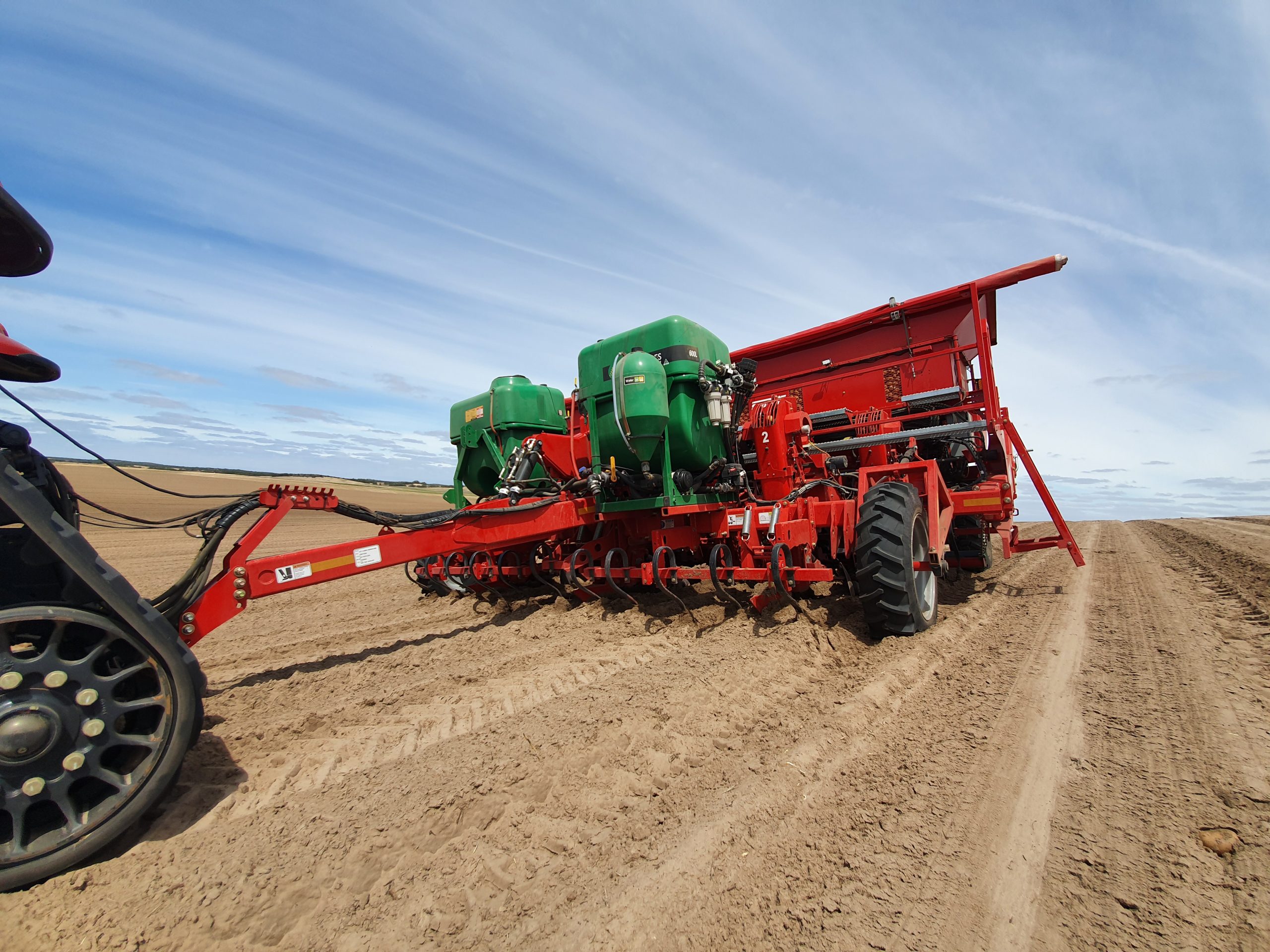
Potato planters deliver seed tubers precisely into prepared soil, using cup or belt systems for consistent spacing and depth that drive uniform emergence and higher marketable yields. Many models draw PTO power for metering drives, fertilizer applicators, or covering discs, requiring shafts that maintain steady speeds across variable terrain. Australian Driveshaft Pty Ltd supplies shafts built for the sandy loams of South Australia and heavier soils in Victoria, ensuring smooth operation in both two-row and multi-row configurations common nationwide.

Growers target depths around 100-150 mm with spacings suited to varieties like Atlantic for processing or Kennebec for fresh markets.
South Australia Mallee and Riverland Case Studies
South Australia’s potato heartland stretches from the Virginia horticulture zone north of Adelaide through the Mallee and Riverland districts, where irrigated fields support high-input processing crops destined for crisps and fries. Planters here often feature four to eight rows, demanding shafts that handle sustained torque for fertilizer side-dressing and ridging in sandy soils prone to shifting. Working with growers near Pinnaroo and Loxton over many seasons, we’ve tackled vibration issues from long folding frames that previously disrupted cup chain timing. One enterprise in the Murraylands switched to our heavier series shafts after lighter ones flexed under load in windrowed beds, achieving singulation rates over 97 percent that boosted uniform sizing for processors. Heat during autumn planting tests lubricant stability, so high-capacity grease reservoirs extend intervals in 35-degree days common to the region. Integrating ratchet clutches safeguards metering units from stones hidden in irrigation sediments. Compliance with Work Health and Safety regulations mandates full guarding resistant to UV degradation in open paddocks. Local experiences highlight balanced designs preventing wear on tractor outputs during thousands of hectares annually. These practical adaptations from South Australian operations inform builds that withstand abrasive sands while supporting variable rate applications synced to yield maps, contributing to the state’s dominant share in national washed potato supply.
Similar patterns in the Adelaide Plains emphasize quick maintenance for intensive rotations.
Core Technical Parameters for Potato Planter Drive Shafts
Selection depends on rows, accessories, and soil resistance. The list below covers 32 parameters from extensive field use:
| Parameter | Description | Common Range |
|---|---|---|
| 1. Series Level | Load rating | Series 4 to 6 |
| 2. Tractor Interface | Spline | 1-3/8″ 6-spline |
| 3. Planter Connection | Yoke | Quick disconnect |
| 4. Minimum Length | Collapsed | 850-1150 mm |
| 5. Maximum Length | Extended | 1250-1700 mm |
| 6. Torque 540 rpm | Standard | 450-750 Nm |
| 7. Torque 1000 rpm | Option | 350-550 Nm |
| 8. Power Capacity | HP continuous | 50-100 HP |
| 9. Tube Geometry | Profile | Triangular |
| 10. Overlap Requirement | Safety | 200-300 mm |
| 11. Joint Size | Cross | 27-32 mm |
| 12. Release Type | Yoke | Push-pin |
| 13. Shielding | Cover | Full plastic |
| 14. Overload | Clutch | Ratchet or slip |
| 15. Clutch Trip | Torque | 600-900 Nm |
| 16. Assembly Mass | Weight | 20-30 kg |
| 17. Angle Max | Bend | 25-40 degrees |
| 18. Stroke | Telescopic | 350-550 mm |
| 19. Material | Tube | ST52.3 |
| 20. Lubrication | Interval | 20-50 hours |
| 21. Chains | Retention | Dual |
| 22. Standards | Compliance | ASABE compatible |
| 23. Balance Spec | Vibration | G6.3 |
| 24. Shear | Bolt | 8.8 grade |
| 25. Thickness | Wall | 4-5 mm |
| 26. Finish | Coating | Powder |
| 27. Wide Joint | Angle | Up to 80 degrees |
| 28. Freewheel | Option | Available |
| 29. Dust Protection | Seals | Triple lip |
| 30. Metering Support | Stability | Low vibe |
| 31. Corrosion | Resistance | Enhanced |
| 32. Durability | Hours | 3000-5000 |
Victorian Gippsland and Thorpdale Practical Insights
Victoria’s cool, high-rainfall zones around Thorpdale and the Gippsland region produce premium fresh market and seed potatoes, with planters navigating volcanic soils that retain moisture but compact easily. Multi-row cup planters dominate, requiring shafts that tolerate wet conditions without corrosion accelerating in acidic profiles. Collaborating with growers near Trafalgar, we’ve refined designs addressing mud accumulation that previously weighed down telescoping sections. A seed producer in the Strzelecki Ranges adopted our upgraded sealing after water ingress caused joint seizures during spring planting, enabling consistent depth placement critical for certified stock uniformity. Cooler temperatures ease heat concerns but increase fungal risks, so durable guards prevent operator exposure. Integrating variable rate fertilizer demands precise torque without surges disrupting hopper flow. Local trials show reduced vibration improving singulation in undulating paddocks, supporting brush varieties like Sebago popular for washing. These Victorian experiences complement southern efforts, emphasizing longevity in moist environments while aiding sustainable practices like cover cropping integration before planting.
Tasmanian northern areas share similar wet challenges with focus on seed certification.
Comparison with Alternative Brands
Australian Driveshaft Pty Ltd shafts excel in abrasive and variable soils against various competitors. While some options (for technical reference only, Australian Driveshaft Pty Ltd is an independent manufacturer) provide adequate basic service, our reinforced tubing and superior sealing offer extended life in sandy conditions prevalent here.Users frequently mention smoother metering and fewer adjustments.
Essential Parts and Wear Items
- Cross kits – inspect for movement
- Clutch plates – seasonal check
- Guards – replace damaged
- Shear bolts – stock extras
- Telescoping areas – clean soil
- Chains – secure properly
Power System Selection Points Summary
Evaluate rows and fertilizer needs initially. Emphasize sealing for dust, balance for accuracy, and safety features meeting Australian standards.

Complementary Gearboxes from Australian Driveshaft Pty Ltd
Our gearboxes complement potato planter shafts ideally, ranging from compact units for two-four row machines in Tasmania’s seed operations to robust multi-output models for eight-row planters in South Australia’s processing belts. Entry-level bevel gear designs handle 50 HP inputs with ratios ensuring steady cup chain speeds in lighter volcanic soils around Thorpdale.
Mid-tier helical gear boxes suit six-row configurations common in Victoria’s Gippsland, delivering up to 100 HP with separate drives for fertilizer and covering elements. Oil-bath systems resist contamination from wet plantings.
For large-scale 12-row planters in the Mallee, heavy planetary reducers manage 150 HP while providing pass-through outputs for ancillary pumps. Cooling ribs address prolonged autumn sessions.
All feature tapered bearings for frame loads, quick sprocket changes for spacing adjustments, and mountings fitting popular cup systems.
Specialized metering gearboxes maintain constant rotation for accurate tuber drop regardless of ground speed variations.
Recent additions include corrosion-proof internals for irrigated zones and integration points for rate controllers.
Repair kits supply complete gear sets, seals, and housings for fast fixes during windows.
In mixed South Australian farms, versatile units power planter while adapting to harvester swaps.
Western Australian sandy regions validate dust-resistant builds supporting emerging expansion.
Future versions explore electric assists reducing mechanical loads in precision setups.
Support networks stock components in key hubs like Virginia and Parilla for rapid response.
These gearboxes paired with our shafts create integrated solutions maximizing planting precision across Australia’s potato landscapes.
Recent updates show sustained investment in potato machinery amid efforts to enhance efficiency in variable climates.
Frequently Asked Questions
How to select series for potato planter rows?
Base on total accessories and HP. Series 4 for up to 6 rows, higher for more.
What handles sandy soil abrasion?
Reinforced tubing and sealed joints essential.
Clutch importance?
Protects cups from blockages preserving accuracy.
Length measurement tips?
With planter attached lowered, ensure 250 mm overlap.
Grease in dusty areas?
Every 20 hours minimum.
Corrosion signs?
Pitting or stiffness – act quickly.
Wide angle benefits?
For uneven fields maintaining delivery.
Guard standards?
Full coverage required.
Best for multi-row?
Higher torque series with balance.
Replacement timing?
Excessive play or noise.