
Core Power Delivery Challenges in Modern Air Seeding Systems
Air seeders have revolutionized grain production in Australia, allowing vast areas to be sown quickly and accurately with minimal soil disturbance. From the expansive wheat fields of Western Australia’s Wheatbelt to the mixed cropping zones in South Australia’s Eyre Peninsula and the fertile plains of New South Wales’ Riverina, these machines depend on robust drive shafts to transfer power from the tractor PTO to the metering fans and distribution systems. The drive shaft must handle constant high-speed rotation while accommodating significant angular changes as the seeder navigates undulating terrain or turns at headlands.
In typical setups, the shaft powers centrifugal fans that generate airflow up to 5000 RPM, pushing seed and fertilizer through long hoses to multiple openers. This demands shafts with exceptional balance to minimize vibration, which could otherwise cause uneven distribution or premature wear on bearings. Over the years working with growers in regions like Queensland’s Darling Downs, we’ve observed how dust ingress during dry seeding windows accelerates joint degradation if seals aren’t up to the task.
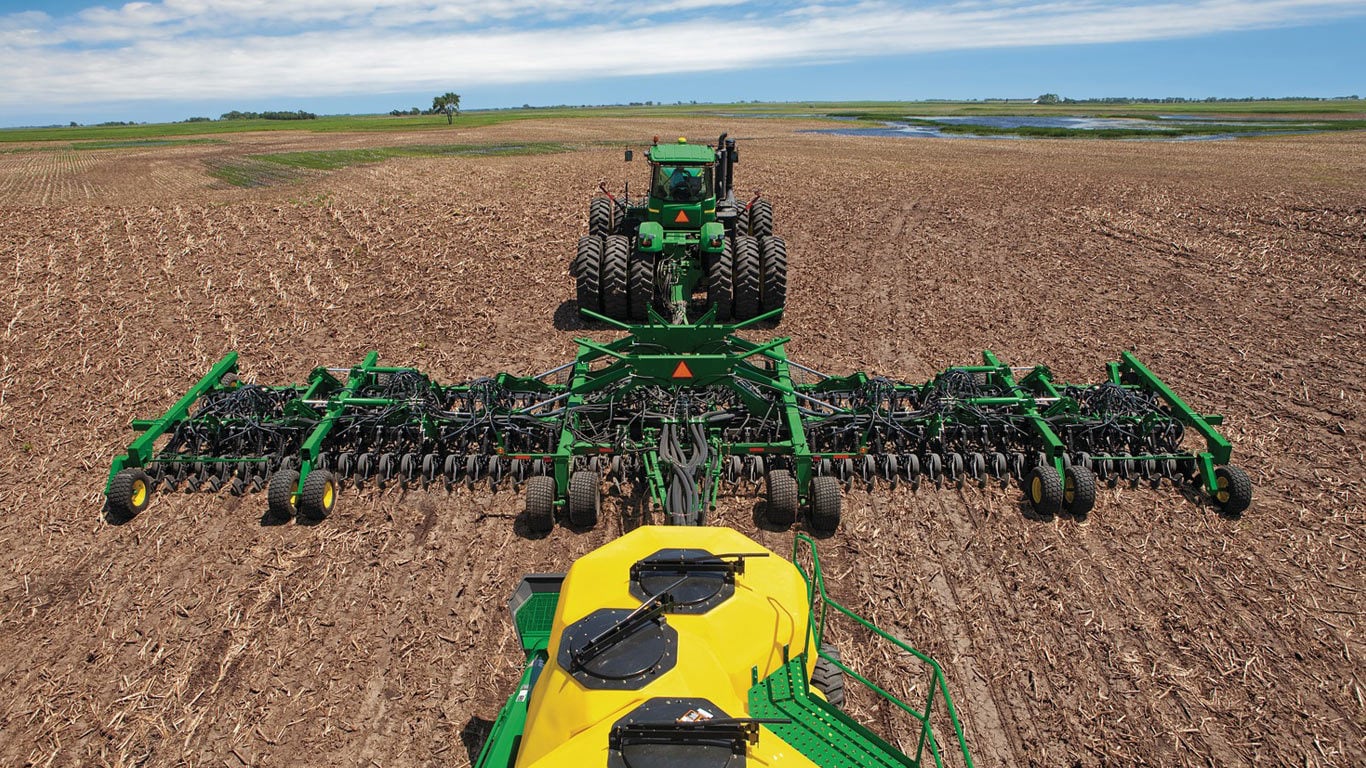
Wide-width air seeders, often spanning 18 to 24 meters, create substantial hitch loads and flexing, requiring telescoping sections that maintain overlap without binding. Operators in Victoria’s Wimmera-Mallee appreciate shafts with quick-release yokes for fast changes between carts or when servicing fans. Safety remains paramount, with full guarding essential to protect against entanglement in open paddocks where help might be far away.
Many advanced air seeders now incorporate variable rate technology, where the drive shaft indirectly supports precise control through reliable fan speed maintenance. In no-till systems common across drought-prone areas, consistent power ensures accurate placement even in stubble-heavy conditions. Growers report that well-matched shafts reduce fuel consumption by avoiding slippage or overloads that strain the tractor.
From personal experience supplying to large-scale operations near Geraldton, shafts with reinforced crosses withstand the shock loads when trailers hit rocks or when folding booms for transport. The ability to operate at 1000 RPM on modern tractors allows higher ground speeds, covering more hectares per day during narrow planting windows.
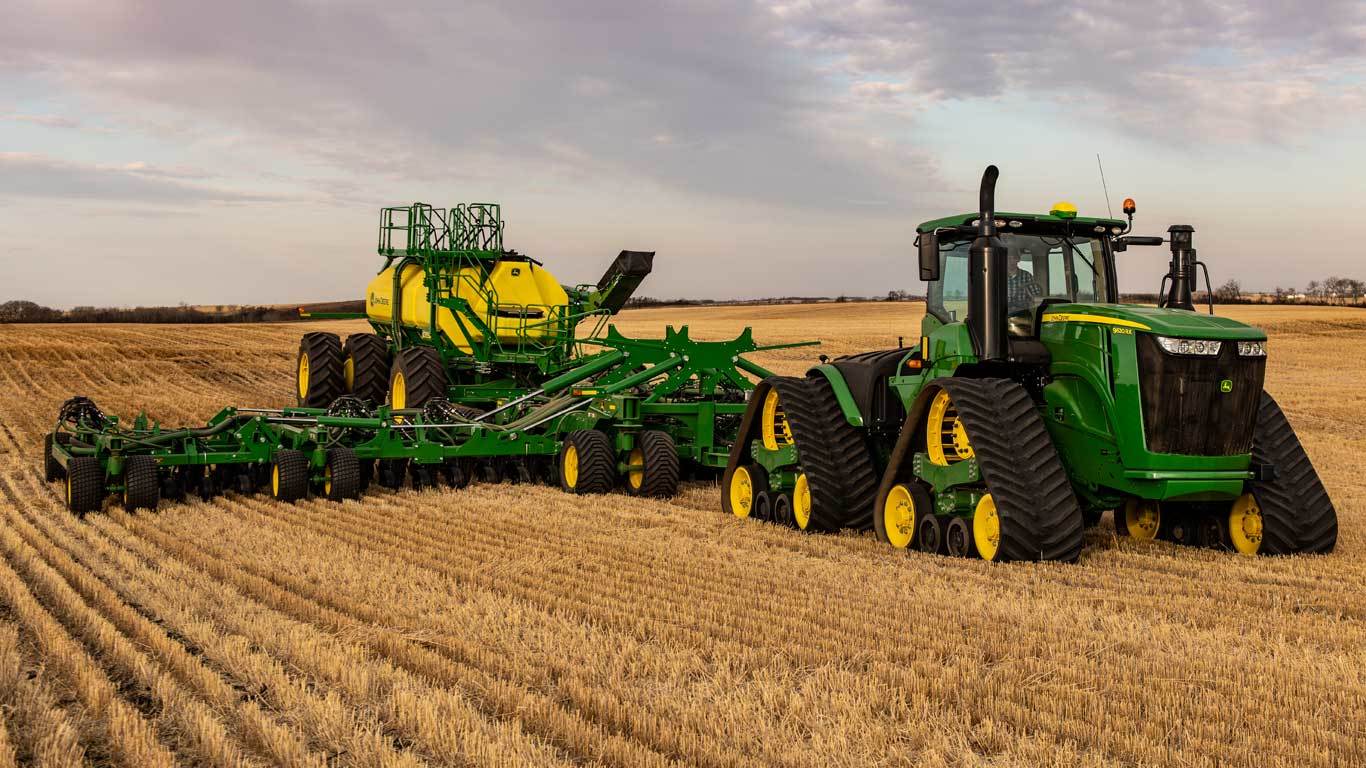
Ultimately, the drive shaft forms the critical link ensuring seed emerges uniformly, directly impacting yield in moisture-limited environments. Choosing components rated for continuous duty prevents breakdowns that could delay seeding and expose crops to adverse weather.
Technical Specifications for Air Seeder Drive Shafts
Matching the drive shaft precisely to air seeder demands ensures longevity and performance. Here are 28 key parameters developed from extensive field use in Australian conditions:
| Parameter | Description | Typical Range for Air Seeders |
|---|---|---|
| 1. Series Type | Standard classification | Series 6 to 9 or Metric 6 to 12 |
| 2. Tractor Spline | PTO connection | 1-3/8″ 21-spline or 1-3/4″ 20-spline |
| 3. Fan Input Yoke | Seeder side | Clamp bolt or quick-disconnect |
| 4. Closed Length | Compressed measurement | 1000-1600mm |
| 5. Maximum Extension | Operating stretch | 1400-2200mm |
| 6. Torque at 1000 RPM | Continuous rating | 1000-2000 Nm |
| 7. Peak Torque | Surge capacity | Up to 3000 Nm |
| 8. HP Rating | Power handling | 100-300 HP |
| 9. Tube Profile | Shape variant | Star or triangular |
| 10. Tube Thickness | Wall gauge | 4-6mm |
| 11. Journal Diameter | Cross size | 30-35mm |
| 12. Operating Angle | Max deflection | Up to 40 degrees |
| 13. Guard Design | Safety cover | Integral bearing support |
| 14. Grease Frequency | Maintenance | 10-30 hours |
| 15. Overload Protection | Clutch type | Friction or ratchet |
| 16. Clutch Torque | Release setting | 1200-2500 Nm |
| 17. Weight | Assembly | 25-50 kg |
| 18. Material | Steel grade | 42CrMo alloy |
| 19. Finish | Protection | Cold drawn phosphated |
| 20. Balance Standard | Vibration | ISO G4.0 |
| 21. Overlap Minimum | Safety | 300mm |
| 22. CV Option | Wide angle | 80-degree available |
| 23. Release Yoke | Connection | Push-pin |
| 24. Chain Kit | Guard retention | Included |
| 25. Compliance | Standards | ASABE/ISO aligned |
| 26. Temp Range | Operation | -10°C to 90°C |
| 27. Seal Rating | Dust proof | Multi-lip high pressure |
| 28. Life Expectancy | Cycles | 2 million+ |

Western Australian Broadacre Seeding Realities
In Western Australia’s vast grain-growing regions around Merredin and Katanning, air seeders operate over thousands of hectares in low-rainfall zones, where every pass counts during short optimal windows. Drive shafts here face extreme dust loads from sandy soils, requiring superior sealing to prevent abrasive wear on universal joints. Local operators favor heavier series shafts to handle the torque needed for large bin capacities and wide bars.
A contractor near Narrogin shared how switching to star-profile tubes reduced flexing on a 20-meter seeder, improving fan speed stability and seed placement accuracy in windy conditions. Compliance with ASABE guarding standards is strictly observed, given remote work sites.
In the northern Wheatbelt near Geraldton, higher temperatures demand heat-resistant grease, while telescoping lengths accommodate varying drawbar heights on different tractors. Cases from the area highlight fewer breakdowns with reinforced yokes during long 18-hour days.
South Australian growers on the Yorke Peninsula use similar setups for barley and legumes, appreciating quick maintenance features when seeding into stubble.
Overall, these conditions underscore the need for shafts built tough yet flexible, directly supporting sustainable no-till practices that conserve moisture.
Critical Components and Wear Management
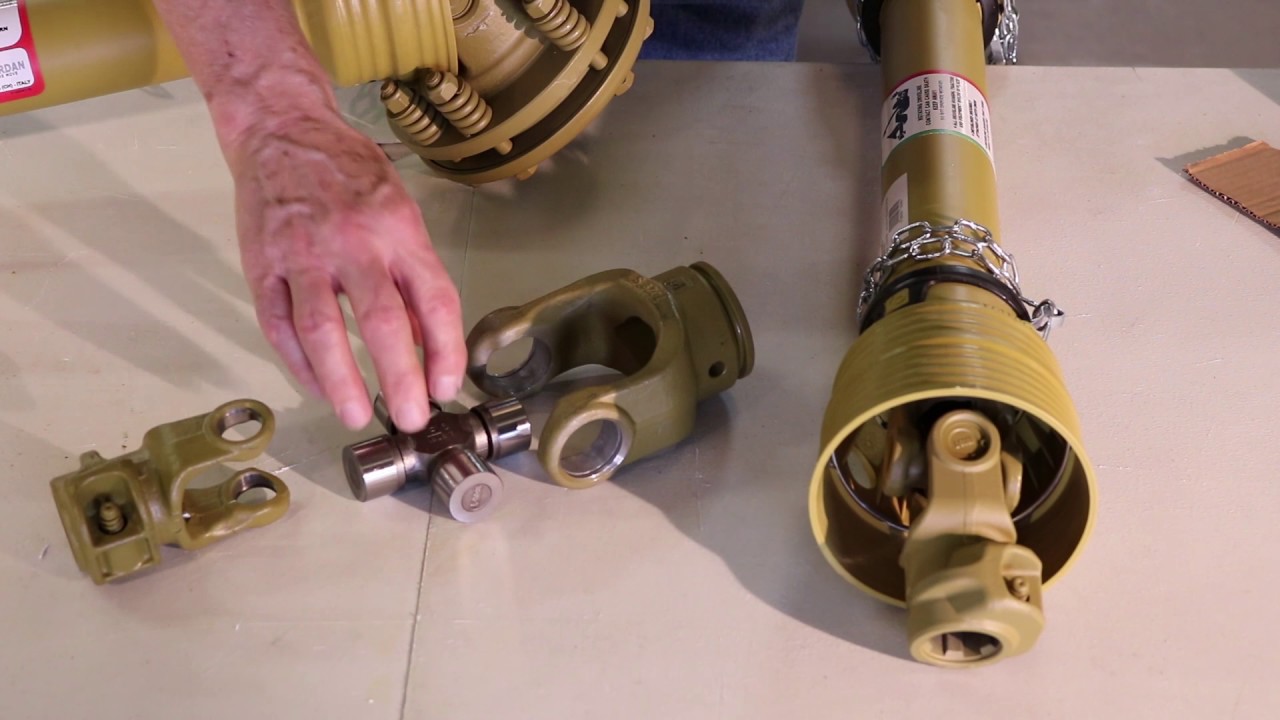
Universal joint crosses and bearings endure the highest cycles in air seeder applications, with grease starvation from dust the primary failure mode. Yokes and telescoping tubes accumulate residue, so regular cleaning prevents seizure. Guards must remain intact per ASABE requirements, with chains securing them against rotation.
Friction clutches protect fans from blockages, while overrunning options suit inertial loads when disengaging. Spare crosses and seals are essentials in the ute for field repairs.
Personal stories from Victorian farms emphasize checking overlap before each season to avoid separation on rough ground.
Alignment with Common Industry Designs
Our shafts match specifications from established systems like those from Bondioli & Pavesi or Comer (technical reference only; Australian Driveshaft Pty Ltd is an independent manufacturer), ensuring seamless integration and performance.
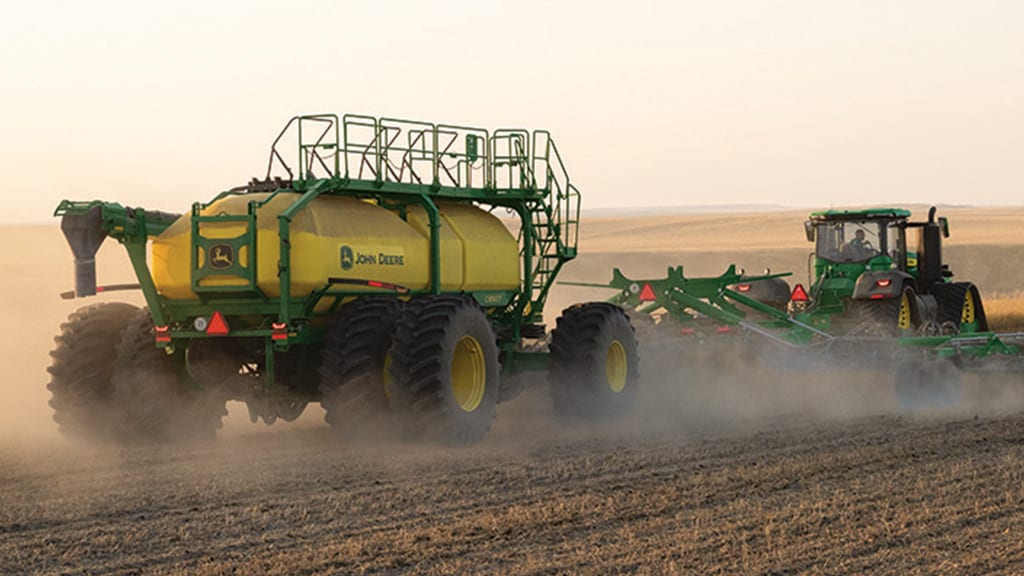
Air Seeder Drive Shaft in Field Operation
This overview demonstrates fundamental PTO shaft principles applicable to air seeder power transfer.
Supporting Gearboxes for Complete Air Seeding Power Trains
Australian Driveshaft Pty Ltd also manufactures a comprehensive range of gearboxes that complement drive shafts in air seeder systems, providing speed control, direction changes, and multiple outputs for enhanced functionality.
Our fan drive gearboxes feature helical gears for quiet operation at high speeds, with ratios optimized for 1000 RPM inputs delivering consistent airflow. Cast housings with cooling fins handle heat buildup during extended runs.
Metering roll gearboxes ensure precise seed delivery, using worm drives for accurate low-speed torque in variable rate applications.
Splitter gearboxes distribute power to dual fans or auxiliary pumps, with independent clutches for sectional control.
Bevel gearboxes redirect power for side-band fertilizer placement, supporting heavy loads in deep ripping setups.
Planetary reduction boxes compactly multiply torque for large hopper augers, sealed against dust.
Parallel shaft units increase speed for high-volume blowers, with oil circulation for lubrication.
Custom multi-speed gearboxes allow on-the-go adjustments for different crops.
Overrunning clutch integrated boxes prevent backspin damage.
All models use premium alloys, precision machining, and rigorous testing to match Australian conditions.
Pairing with our drive shafts creates warrantied systems proven in thousands of hectares.
Recent innovations include sensor-ready housings for monitoring in precision ag.
And many more specialized options for unique setups.

Frequently Asked Questions About Drive Shafts for Air Seeders
How to size a drive shaft for my air seeder fan?
Calculate required torque from fan HP demand, add 20% margin, match series rating accordingly.
What causes uneven fan speed?
Worn joints or insufficient overlap; inspect for play and adjust length.
Best grease for dusty seeding?
High-temperature synthetic lithium complex, apply every 20 hours.
Clutch necessary on air seeders?
Highly recommended to protect from hose blockages.
Maximum safe operating angle?
35 degrees standard; use CV for higher.
How to check guarding compliance?
Ensure full coverage with no gaps, per ASABE guidelines.
Signs of shaft imbalance?
Vibration increasing with speed; rebalance professionally.
Quick yoke cleaning tip?
Use compressed air and rag; avoid water near seals.
Length adjustment for different tractors?
Cut tubes equally, maintain overlap specs.
When to replace crosses?
At first sign of roughness or needle loss.
Recent Australian Air Seeder Driveline Developments
In late 2025, Gason’s Diamond Series air seeder won Australian-made machine of the year at Henty Field Days, highlighting local innovation in large-scale seeding. Ongoing emphasis on durable components supports expanding precision planting amid variable seasons.
Contact Australian Driveshaft Pty Ltd now for custom drive shaft and gearbox recommendations optimizing your air seeder setup.